Jessica Smith died in her sleep on December 27th 2007 – aged 22
A tribute:
It is an honour to stand before you today to share some memories and reflections of a talented, beautiful and wonderfully energetic young woman who we were all privileged to know. We want to use today celebrate Jess’s life because she was certainly something special.
I first knew Jess as a fresh faced graduate – working in my first job at Jubilee Campaign. Ever since I’ve known her, two aspects of her personality stood out to me: her natural confidence and her determined courage.
Her confidence shone through when Danny (my boss at the time) thought it would be good for her to get some experience working in the office. She used to come for several weeks in the summer – starting out as an assistant in the office and finishing virtually running the office!
She didn’t let being the youngest or least experienced in the office hold her back. Jess threw herself into it – especially helping me in the campaign to free James Mawdsley from prison in Burma. She intuitively took the side of the under-dog and I know how proud she was of being part of the Jubilee’s narrative of fighting injustice.
She was also courageous. I remember being on a train with her one day and getting into some detailed discussion on ethics or religion. It upset the man sitting across from and suddenly interrupted – telling me I should keep my opinions to myself and not impose them on Jess. Before I could respond and much to my relief, Jess looked at him with a hint of distain and told him directly, ‘I can think for myself, you know’. That was Jess – like an arrow straight and true - never afraid to engage in the big issues and never afraid to speak her mind.
I also remember smiling wryly one day when danny told me that they’d realised that Jess had given shelter to a girl who had run away from home. Jess had fed and looked after her for three days without anyone knowing! That takes a certain courage.
But I also saw that courage when Jess was ill. I got a phone call from Jess at work a few months ago after I hadn’t heard from her for a long time. She was calling from hospital but she wasn’t afraid to reach out and let me know she needed a friend.
CS Lewis once wrote ‘the pain now is part of the joy then’. That’s why we’ll miss Jess so much because she brought so much life, so much energy and so much joy.
10th January 2008 St Paul’s Church, Addlestone
Thursday, January 10, 2008


Wednesday, October 10, 2007
New York's Big Idea
 The Statue of Liberty is the only statue in the world to represent an idea and not a person, apparently.
So said our softly spoken guide (whose white wavy hair and furrowed brow reminded me of Brookes, the old librarian lag from Shawshank Redemption - minus the pet raven). The statue was given by the French on October 28th, 1886 to commemorate the centennial of the American Declaration of Independance and has come to personify what New York is all about. The famous torch made of 22 carot gold - a reflection of the undying pursuit of freedom, the robe, a symbol of liberty and integrity, the seven points of the crown symbolising the seven seas of the world, the book held in the statue's left hand represents bill of rights which underpins the US constitution and the Roman numerals on the book read 'July 4th 1776' - reminding us of the founding father's vision to build a new nation based on the ideal of democracy.
Today, New York means so many different things to people; Joe Demagio's legacy, $1 Hot Dogs, Madison Square Garden, the Imagine memorial, just about all Meg Ryan films, that day in September 2001...
For me, New York is a testimony to human endeavor and the value of thinking BIG. There is tremendous energy and optimism in the every corner of the city and it is mirrored in the people you meet.
It is one of the most technically advanced and fast moving cities you can visit. And yet not even 250 years ago, Manhatten island (which is the only one of New York's five borough's to have kept its indigenous Indian name) was just a tree-lined and rocky peninsula. Our guide told us that Manhatten has the greatest geological variety of rocks in the world - another dubious factual claim but one which he explained was the reason why it has been possible to build so many buildings in such a concentrated space.
It is undeniable that incredible innovation and creativity have been let loose in New York. When immigrants started pouring into Ellis island after the second world war at the rate of 50,000 per day, it was hard to envisage that these disperate communities could create one of the most vibrant urban environments - ok, i'm going to do it - in the world.
New Yorker's 'can do' approach shames the British 'could do but probably won't do' attitude. In New York i am reminded that it is okay to have wild ambitions and certainly not to fear failure. It is possible to create something that is far beyond our initial imaginings. It takes the commitment of lots of individuals and the shared belief that the today's reality doesn't have to be the same tomorrow.
New York isn't perfect, far from it. But you have to be heart hearted not to appreciate what has been achieved. New York represents more than an idea: it is living evidence of the audacity of the human species to realise their dreams.
Friday, July 20, 2007
Fighting the good fight – Addis Ababa, Ethiopia
The pressure was evidently taking its toll. Revd Ayano Chule had reached breaking point. For an Ethiopian man to weep openly in front of near strangers is very rare. But meeting a man like Revd Ayano is a rare occurrence. He is one of the very first religious leaders in Ethiopia to be openly living with HIV. Not only that - he is pioneering a movement to challenge religious leaders to overcome the stigma, denial and discrimination on HIV in their communities.
But he is paying a high price. In the last 9 months, Revd Ayano has been thrown out of his home on four separate occasions. When landlords have discovered his status, they have packed his bags and simply left them on the doorstep. He told us that he could deal with the abuse, harassment, rejection and even physical assaults but he could not successfully continue his work without a safe place to live.
It was clear we were in the presence of a leader. But you have to protect leaders. Thankfully, the philanthropist with whom I was travelling recognised this immediately and agreed to pay for accommodation that would be secure from arbitrary eviction.
‘It is not HIV that kills’, Revd Ayano reminded us. ‘‘It is ignorance, fear and prejudice which kills. If people don’t know their status, they are a danger to themselves and to society. Accurate information is our greatest weapon. No amount of money will solve the problem without education.’’ Although 1 in 11 people in Ethiopia are HIV+, false information is still rife. Up to 80% believe that HIV is caused by sin or judgement while others believe it can be ‘healed’ through repentance and the administering of holy water.
With 99% of people in Ethiopia affiliated to a religious grouping, Revd Ayano knows that religious leaders hold the keys to changing attitudes towards HIV. His wants to see priests and immans be empowered to be ‘heralds of hope’ in calling their communities to be sanctuaries of compassion.
The need for this work was illustrated to me while visiting the home of Abeba Naiza. Abeba is a grandmother who lives in one of the slums in Addis Ababa. She looks after her children’s children because 3 of her 7 daughters have died from HIV related diseases.
One of the children in the home is Herione (which means fruit of the vine). Aged 5, she was just 14 days old when her mother died. Although she will not remember her mother, she did contract HIV from her and lives each day secretly taking the ante retroviral treatment that she needs. Her grandmother asked me to keep my voice down when discussing Heriones’ health for fear the neighbours would find out about her status.
The work Christian Aid is funding in Ethiopia is aiming to create a society where girls like Herione can live free from shame. Revd Ayano reluctantly conceded that most people suspect some moral malpractice is the cause of his status. In fact, he contracted HIV through his wife – who was his only sexual partner. Agonisingly, he endured watching her and their young son die from the virus before deciding to continue the battle against HIV on the front-line.
When asked how he finds the strength to continue, he answered, ‘God has given me a vision. I have the opportunity to save lives because I am HIV+. That is why I carry on.’
ENDS
But he is paying a high price. In the last 9 months, Revd Ayano has been thrown out of his home on four separate occasions. When landlords have discovered his status, they have packed his bags and simply left them on the doorstep. He told us that he could deal with the abuse, harassment, rejection and even physical assaults but he could not successfully continue his work without a safe place to live.
It was clear we were in the presence of a leader. But you have to protect leaders. Thankfully, the philanthropist with whom I was travelling recognised this immediately and agreed to pay for accommodation that would be secure from arbitrary eviction.
‘It is not HIV that kills’, Revd Ayano reminded us. ‘‘It is ignorance, fear and prejudice which kills. If people don’t know their status, they are a danger to themselves and to society. Accurate information is our greatest weapon. No amount of money will solve the problem without education.’’ Although 1 in 11 people in Ethiopia are HIV+, false information is still rife. Up to 80% believe that HIV is caused by sin or judgement while others believe it can be ‘healed’ through repentance and the administering of holy water.
With 99% of people in Ethiopia affiliated to a religious grouping, Revd Ayano knows that religious leaders hold the keys to changing attitudes towards HIV. His wants to see priests and immans be empowered to be ‘heralds of hope’ in calling their communities to be sanctuaries of compassion.
The need for this work was illustrated to me while visiting the home of Abeba Naiza. Abeba is a grandmother who lives in one of the slums in Addis Ababa. She looks after her children’s children because 3 of her 7 daughters have died from HIV related diseases.
One of the children in the home is Herione (which means fruit of the vine). Aged 5, she was just 14 days old when her mother died. Although she will not remember her mother, she did contract HIV from her and lives each day secretly taking the ante retroviral treatment that she needs. Her grandmother asked me to keep my voice down when discussing Heriones’ health for fear the neighbours would find out about her status.
The work Christian Aid is funding in Ethiopia is aiming to create a society where girls like Herione can live free from shame. Revd Ayano reluctantly conceded that most people suspect some moral malpractice is the cause of his status. In fact, he contracted HIV through his wife – who was his only sexual partner. Agonisingly, he endured watching her and their young son die from the virus before deciding to continue the battle against HIV on the front-line.
When asked how he finds the strength to continue, he answered, ‘God has given me a vision. I have the opportunity to save lives because I am HIV+. That is why I carry on.’
ENDS
Monday, July 16, 2007
Leffe village, Ethiopia, July 12th 2007
It is a scene reminiscent of England. Rolling hills, green fields, muddy tracks.
But this isn't England. A line of us are walking single file approaching the Muslim village of Leffe in the Siltie region of central Ethiopia. It is the rainy season and on the surface at least, all seems lush and fertile.
But the green vegetation flatters to deceive. The water table remains dangerously low and access to clean water is the single greatest challenge facing the villagers we are about to meet.
As I climb up a bank, what confronts me needs to be seen to be believed. Half a dozen women are wading knee deep in turgid, brown coloured water. They are helping each other fill brightly coloured jerry cans as part of a daily routine to collect the 20 litres of water they need. Buzzing mosquitoes surround them – this is their natural breeding ground and malaria is a real and ever present threat.
I speak with one of the women, Fatima Ahmed, who is carrying her three year old daughter on her back as she collects water. She tells me that she sometimes she sees worms swimming in her water but she has limited choice. The only alternative is a one and half hour walk to the nearest stream.
In a neighbouring village, I saw women digging sand wells in the riverbed. The women dig up to three metres deep and wait for water to infiltrate through the sand. They spend seven hours every day digging, waiting, collecting and walking. Day in, day out - collecting water has become their life.
This situation is typical in rural communities where access to drinking water is as low as 3%. Despite claims by the Ethiopian Government to provide water for all through a universal access program, communities across Ethiopia, aren’t holding their breath. The only way Leffe village will gain access to water in the forseeable future is a planned Christian Aid project which aims to provide 53,000 people with accessible water within 1km of their homes. Leffe is one of the 18 target villages and understandably Fatima said that this project would transform her life. It would give her the time to earn a living, to look after her children and to plan for the future.
That prospect is only threatened by £440,000 needed to leverage a further £1.2million from the European Commission to fund this project . It seems a small price to pay for the social return it will generate.
There is an Ethiopian saying that water and mothers are the same – both are considered good. But the sight of women collecting dirty water reminds me that not all water is good. It certainly isn't reminiscent of England.
But this isn't England. A line of us are walking single file approaching the Muslim village of Leffe in the Siltie region of central Ethiopia. It is the rainy season and on the surface at least, all seems lush and fertile.
But the green vegetation flatters to deceive. The water table remains dangerously low and access to clean water is the single greatest challenge facing the villagers we are about to meet.
As I climb up a bank, what confronts me needs to be seen to be believed. Half a dozen women are wading knee deep in turgid, brown coloured water. They are helping each other fill brightly coloured jerry cans as part of a daily routine to collect the 20 litres of water they need. Buzzing mosquitoes surround them – this is their natural breeding ground and malaria is a real and ever present threat.
I speak with one of the women, Fatima Ahmed, who is carrying her three year old daughter on her back as she collects water. She tells me that she sometimes she sees worms swimming in her water but she has limited choice. The only alternative is a one and half hour walk to the nearest stream.
In a neighbouring village, I saw women digging sand wells in the riverbed. The women dig up to three metres deep and wait for water to infiltrate through the sand. They spend seven hours every day digging, waiting, collecting and walking. Day in, day out - collecting water has become their life.
This situation is typical in rural communities where access to drinking water is as low as 3%. Despite claims by the Ethiopian Government to provide water for all through a universal access program, communities across Ethiopia, aren’t holding their breath. The only way Leffe village will gain access to water in the forseeable future is a planned Christian Aid project which aims to provide 53,000 people with accessible water within 1km of their homes. Leffe is one of the 18 target villages and understandably Fatima said that this project would transform her life. It would give her the time to earn a living, to look after her children and to plan for the future.
That prospect is only threatened by £440,000 needed to leverage a further £1.2million from the European Commission to fund this project . It seems a small price to pay for the social return it will generate.
There is an Ethiopian saying that water and mothers are the same – both are considered good. But the sight of women collecting dirty water reminds me that not all water is good. It certainly isn't reminiscent of England.
Monday, May 14, 2007
Growing a way out of poverty
Click here to watch Christiain Aid's TV ad. Come on, give what you can. We'll make it multiply.
http://www.youtube.com/watch?v=mzMzjjVwi8k
http://www.youtube.com/watch?v=mzMzjjVwi8k
Christian Aid week address
Sunday 13th March 2007 - St Mary's Holmbury
Thank you for your warm welcome.
I am delighted to be here – especially at the beginning of Christian Aid Week. My wife Nicky and five month son Cohen are here today. This is the first time Cohen has heard his father public speaking – I’ve asked him to pay close attention in the hope that next time he it will be him up here instead of me!
I am passionate about Christian Aid week for two reasons: it has the power to inspire us and it has the power change lives. I want to take this opportunity to talk about both these aspects .
Before I do, perhaps I’ll give you a little of my background: I was raised in Rwanda by missionary parents. As a result, I saw from a young age what it meant for communities to struggle under the weight of poverty and I think it it planted a desire in me to want to work for a equitable world. Since graduating I have had the privilege of visiting countries such as Kenya, Sudan, Brazil and Rwanda - working with poor communities to strengthen the ability to meet the challenges they face. Last year my wife and I went work on the Thai/Burma burma border to get our hands dirty in the process of grass root community action.
Sometimes we feel like the boy in Robert Louis Stevenson novel, who said the world is so big and I am so small, I do not like it at all, at all. The statistics are frightening. When 30,000 children are dying every day of preventable diseases and as I heard this week that 27million people are still trapped in slavery – it is easy to despair.
CAW is about reviving our faint hearts. It is about re-committing ourselves to the battle for justice and affirming our faith that we can do something to change the world.
Does anyone know how many ordinary people leave the comfort of their own home to collect money during CAW? Incredibly, the figure is 300,000.
Does anyone know how much is raised in Christian Aid Week? £15million is raised - the biggest community fundraiser in the country.
That is an incredible achievement and should be a source of great encouragement to us. Although it is 50 years old, it is more important today than ever. A recent poll by the Sunday Times indicated that 8 out of 10 people under the age of 35 have no links with their community whatsoever. It labelled my generation as the ‘can’t be bothered’ generation. Arguably, CAW has never been more counter-cultural and therefore essential to challenging cynicism and promoting active compassion.
So CAW is inspires us but it also changes lives.
I realised this when working in Burma. Christian Aid does a lot of work in Burma – providing emergency supplies to ethnic groups in Burma who have been forced from their homes by the Burma Army. It the world’s longest running civil war and over 500,000 have been forced from their homes and are living in temporary shelters or just under cover of the jungle. It is a desperate situation. The communities I visited were clinging to hope. After brutal attacks from the Burma Army, many had lost everything: from those whose legs had been blown off by a landmine to those who had lost family members or their homes. And yet they had not lost the courage to keep going.
Last week one of the relief workers who worked with the Free Burma Rangers that I worked with was executed by the Burma Army. It was a reminder of the sacrifice and courage that people are taking to provide hope, help and love to people in trouble.
I want to finish with a story of one of the bravest woman I have met. I learnt from Bertrude Mutandigo that good can come from even the worse situations.
A few years ago I returned to Rwanda with my father on a work trip. We met many survivors of the Rwandan genocide – we heard many horrific stories Bertrude’s story stood out.
During the genocide that killed 800,000 in 100 days, Bertrude was raped many times by several soldiers. As a result she contracted HIV and had a child who also had HIV. When we met bertrude, she needed a home away from her town because some of the soldiers were continuing to threaten her.
As I watched this elegant woman tell me her story, I was struck by her resilience and total lack of self pity. It would cost only £2500 to build a new home. I returned to the UK and together with a youth group, we put on a special fundraising night. We raised enough to build her a home and some milk so that she could sell the milk. Bertrude sent us this pot to say thank you. On the side of the pot she had woven the words ‘Dieu est Amor’ – God is Love.
Christian Aid week is about demonstrating that God is Love.
Thank you for your warm welcome.
I am delighted to be here – especially at the beginning of Christian Aid Week. My wife Nicky and five month son Cohen are here today. This is the first time Cohen has heard his father public speaking – I’ve asked him to pay close attention in the hope that next time he it will be him up here instead of me!
I am passionate about Christian Aid week for two reasons: it has the power to inspire us and it has the power change lives. I want to take this opportunity to talk about both these aspects .
Before I do, perhaps I’ll give you a little of my background: I was raised in Rwanda by missionary parents. As a result, I saw from a young age what it meant for communities to struggle under the weight of poverty and I think it it planted a desire in me to want to work for a equitable world. Since graduating I have had the privilege of visiting countries such as Kenya, Sudan, Brazil and Rwanda - working with poor communities to strengthen the ability to meet the challenges they face. Last year my wife and I went work on the Thai/Burma burma border to get our hands dirty in the process of grass root community action.
Sometimes we feel like the boy in Robert Louis Stevenson novel, who said the world is so big and I am so small, I do not like it at all, at all. The statistics are frightening. When 30,000 children are dying every day of preventable diseases and as I heard this week that 27million people are still trapped in slavery – it is easy to despair.
CAW is about reviving our faint hearts. It is about re-committing ourselves to the battle for justice and affirming our faith that we can do something to change the world.
Does anyone know how many ordinary people leave the comfort of their own home to collect money during CAW? Incredibly, the figure is 300,000.
Does anyone know how much is raised in Christian Aid Week? £15million is raised - the biggest community fundraiser in the country.
That is an incredible achievement and should be a source of great encouragement to us. Although it is 50 years old, it is more important today than ever. A recent poll by the Sunday Times indicated that 8 out of 10 people under the age of 35 have no links with their community whatsoever. It labelled my generation as the ‘can’t be bothered’ generation. Arguably, CAW has never been more counter-cultural and therefore essential to challenging cynicism and promoting active compassion.
So CAW is inspires us but it also changes lives.
I realised this when working in Burma. Christian Aid does a lot of work in Burma – providing emergency supplies to ethnic groups in Burma who have been forced from their homes by the Burma Army. It the world’s longest running civil war and over 500,000 have been forced from their homes and are living in temporary shelters or just under cover of the jungle. It is a desperate situation. The communities I visited were clinging to hope. After brutal attacks from the Burma Army, many had lost everything: from those whose legs had been blown off by a landmine to those who had lost family members or their homes. And yet they had not lost the courage to keep going.
Last week one of the relief workers who worked with the Free Burma Rangers that I worked with was executed by the Burma Army. It was a reminder of the sacrifice and courage that people are taking to provide hope, help and love to people in trouble.
I want to finish with a story of one of the bravest woman I have met. I learnt from Bertrude Mutandigo that good can come from even the worse situations.
A few years ago I returned to Rwanda with my father on a work trip. We met many survivors of the Rwandan genocide – we heard many horrific stories Bertrude’s story stood out.
During the genocide that killed 800,000 in 100 days, Bertrude was raped many times by several soldiers. As a result she contracted HIV and had a child who also had HIV. When we met bertrude, she needed a home away from her town because some of the soldiers were continuing to threaten her.
As I watched this elegant woman tell me her story, I was struck by her resilience and total lack of self pity. It would cost only £2500 to build a new home. I returned to the UK and together with a youth group, we put on a special fundraising night. We raised enough to build her a home and some milk so that she could sell the milk. Bertrude sent us this pot to say thank you. On the side of the pot she had woven the words ‘Dieu est Amor’ – God is Love.
Christian Aid week is about demonstrating that God is Love.
Monday, March 05, 2007
A voice from the wilderness
This latest entry was written by one of the bravest men I have met.
He cannot be named because the work he does takes him illegally into Burma to stand with the oppressed (and largely forgotten) ethnic minority groups. Despite being listed as an enemy of the state by the ruling junta, he continues to lead a subversive movement bringing hope and help deep into Burma's jungle.
The force of his personality and power of his example has left an indelible mark on my life.
Here he sets out why Burma is deserving of our attention. Try finding any argument with it.
10 reasons to fight for freedom in Burma
1. For human dignity.
The power of the oppressor is unrestrained: Girls being raped, children chased from their homes, parents murdered, restricted education, and people living in fear are wrong. Arbitrary arrests, and forced relocation are other tools of the regime. Human value crosses all political, religious, economic, and social lines and for this we need to stand with the people of Burma.
2. For the restoration of democracy.
There was a democratically elected government that was forcefully displaced by a brutal dictatorship.
3. For the release of political prisoners.
Nobel Peace Prize winner Aung San Suu Kyi, who is still under house arrest, is one of thousands of political prisoners.
4. For ethnic rights, honor and future peace.
Ethnic minorities comprise over 40% of the population of Burma and thus should be equitable partners now and in Burma's future. Without them there is no just or durable solution for a peaceful and democratic Burma. Burma's brutal campaign against the ethnics has resulted in more than 1 million IDPs, over 1 million refugees, and gross human rights violations such as Burma's large scale use of landmines to target civilian populations. Many of the ethnic peoples of Burma were allies for freedom in World War II. It is a matter of honor not to forget them.
5. For public health.
There is a growing AIDS epidemic in Burma, and in overall health, Burma ranks as one of the worst in the world. Approximately one out of every 10 children in Burma die before their 5th birthday. The ratio is twice as high among the thousands of families forced to flee their homes by the military's ongoing campaigns.
6. For an end to religious persecution.
There is widespread religious persecution in Burma and this is a violation of a foundational and sacred human right.
7. For an end to forced labor and use of humans as minesweepers.
The regime forces thousands of people each year to work on State projects and during military campaigns uses people to carry supplies and as human minesweepers.
8. For the protection of the environment.
Unchecked and large scale clear cutting of some of the worlds last remaining natural teak and other tropical hardwood reserves, toxic mining practices, and the poorly planed building and proliferation of dams are among the many destructive practices that are damaging the country now and for future generations. The wanton and unchecked destruction of the environment in Burma is not only harmful to Burma, but to all of the surrounding countries.
9. For the control of narcotics.
Burma is one of the main producers of amphetamines in the world, and is #1 in Southeast Asia. Burma, behind Afghanistan, is the #2 producer of Opium/Heroin in the world.
10. For regional security.
Burma is building up its military with assistance from other area dictatorships and this along with its interest in a nuclear program makes it a regional security threat. Its immoral leadership and lack of accountability also make it a potential global threat.We the global community have the opportunity to work with the people of Burma for change. Our goodwill can encompass more than just narrowly perceived national interest. Freedom everywhere is good for all people and we of every nation must be able to stand with others even if there is no perceived or immediate benefit for us. Each of us can live our lives for the highest things, to use the best of our heritage, values and prosperity to be part of positive change in the world. This takes courage, selflessness and finally a belief that all people count.
May God give us all wisdom, love and humility as we move forward with the people of Burma.
A relief team leader
He cannot be named because the work he does takes him illegally into Burma to stand with the oppressed (and largely forgotten) ethnic minority groups. Despite being listed as an enemy of the state by the ruling junta, he continues to lead a subversive movement bringing hope and help deep into Burma's jungle.
The force of his personality and power of his example has left an indelible mark on my life.
Here he sets out why Burma is deserving of our attention. Try finding any argument with it.
10 reasons to fight for freedom in Burma
1. For human dignity.
The power of the oppressor is unrestrained: Girls being raped, children chased from their homes, parents murdered, restricted education, and people living in fear are wrong. Arbitrary arrests, and forced relocation are other tools of the regime. Human value crosses all political, religious, economic, and social lines and for this we need to stand with the people of Burma.
2. For the restoration of democracy.
There was a democratically elected government that was forcefully displaced by a brutal dictatorship.
3. For the release of political prisoners.
Nobel Peace Prize winner Aung San Suu Kyi, who is still under house arrest, is one of thousands of political prisoners.
4. For ethnic rights, honor and future peace.
Ethnic minorities comprise over 40% of the population of Burma and thus should be equitable partners now and in Burma's future. Without them there is no just or durable solution for a peaceful and democratic Burma. Burma's brutal campaign against the ethnics has resulted in more than 1 million IDPs, over 1 million refugees, and gross human rights violations such as Burma's large scale use of landmines to target civilian populations. Many of the ethnic peoples of Burma were allies for freedom in World War II. It is a matter of honor not to forget them.
5. For public health.
There is a growing AIDS epidemic in Burma, and in overall health, Burma ranks as one of the worst in the world. Approximately one out of every 10 children in Burma die before their 5th birthday. The ratio is twice as high among the thousands of families forced to flee their homes by the military's ongoing campaigns.
6. For an end to religious persecution.
There is widespread religious persecution in Burma and this is a violation of a foundational and sacred human right.
7. For an end to forced labor and use of humans as minesweepers.
The regime forces thousands of people each year to work on State projects and during military campaigns uses people to carry supplies and as human minesweepers.
8. For the protection of the environment.
Unchecked and large scale clear cutting of some of the worlds last remaining natural teak and other tropical hardwood reserves, toxic mining practices, and the poorly planed building and proliferation of dams are among the many destructive practices that are damaging the country now and for future generations. The wanton and unchecked destruction of the environment in Burma is not only harmful to Burma, but to all of the surrounding countries.
9. For the control of narcotics.
Burma is one of the main producers of amphetamines in the world, and is #1 in Southeast Asia. Burma, behind Afghanistan, is the #2 producer of Opium/Heroin in the world.
10. For regional security.
Burma is building up its military with assistance from other area dictatorships and this along with its interest in a nuclear program makes it a regional security threat. Its immoral leadership and lack of accountability also make it a potential global threat.We the global community have the opportunity to work with the people of Burma for change. Our goodwill can encompass more than just narrowly perceived national interest. Freedom everywhere is good for all people and we of every nation must be able to stand with others even if there is no perceived or immediate benefit for us. Each of us can live our lives for the highest things, to use the best of our heritage, values and prosperity to be part of positive change in the world. This takes courage, selflessness and finally a belief that all people count.
May God give us all wisdom, love and humility as we move forward with the people of Burma.
A relief team leader
Monday, February 19, 2007
30 years on: remembering Janani Luwum
On February 16th, 1977 – days before I was born – one of my great heroes was killed by one the 20th century’s most notorious despots.
Archbishop Janani Luwum led the Anglican church in Uganda in the mid 1970s at the height of Idi Amin’s brutal reign. During Amin’s seven year rule from 1971, Amin killed thousands and forced millions more (mostly ethnic Indians) to flee Uganda.
Luwum was one of the few not to be quieted by Amin’s intimidation. He found the courage to preach a message love while Amin practised his politics of hate. In spite of the grave risks, Luwum openly exhorted people to follow Christ in defying tyranny, standing up against evil and speaking the truth.
Eventually, he was accused of treason and was arrested and put on military trial.
Before the trial could take place, Luwum disappeared. It was later verified that Luwum was forced into a confession of guilt, was beaten, abused and eventually shot – his bullet riven body was thrown from a speeding car.
While Amin pretended the death was accidental, the people never believed him. For Amin, it was a massive mis-calculation. When 25,000 people came to Luwum’s funeral, Amin must have known that his time was running out. His once immutable power only last lasted for another year – although he was never convicted for his crime.
Free from Idi Amin's grip on power, Uganda is now seen as one of the success stories of Africa. Much of its bi-lateral debt has been paid off which has enabled 2.2 million people to gain access to water in Uganda and millions more children have the opportunity for an education.
If you go to Westminster Abbey, you will see eight statues of individuals – all of whom have been martyred because of the threat their faith posed to those in power. Luwum’s statue is one.
To me, Luwum’s statue is a reminder that his sacrifice 30 year’s ago is still changing lives today.
Archbishop Janani Luwum led the Anglican church in Uganda in the mid 1970s at the height of Idi Amin’s brutal reign. During Amin’s seven year rule from 1971, Amin killed thousands and forced millions more (mostly ethnic Indians) to flee Uganda.
Luwum was one of the few not to be quieted by Amin’s intimidation. He found the courage to preach a message love while Amin practised his politics of hate. In spite of the grave risks, Luwum openly exhorted people to follow Christ in defying tyranny, standing up against evil and speaking the truth.
Eventually, he was accused of treason and was arrested and put on military trial.
Before the trial could take place, Luwum disappeared. It was later verified that Luwum was forced into a confession of guilt, was beaten, abused and eventually shot – his bullet riven body was thrown from a speeding car.
While Amin pretended the death was accidental, the people never believed him. For Amin, it was a massive mis-calculation. When 25,000 people came to Luwum’s funeral, Amin must have known that his time was running out. His once immutable power only last lasted for another year – although he was never convicted for his crime.
Free from Idi Amin's grip on power, Uganda is now seen as one of the success stories of Africa. Much of its bi-lateral debt has been paid off which has enabled 2.2 million people to gain access to water in Uganda and millions more children have the opportunity for an education.
If you go to Westminster Abbey, you will see eight statues of individuals – all of whom have been martyred because of the threat their faith posed to those in power. Luwum’s statue is one.
To me, Luwum’s statue is a reminder that his sacrifice 30 year’s ago is still changing lives today.
Monday, February 12, 2007
My mission statement
If you ever find yourself in the eastern jungles of Burma, you will see hundreds of humanitarian teams seeking to bring help, hope and love to internally displaced ethnic groups. You will also notice that many of the teams risking their lives to venture illegally inside Burma are wearing a green T-shirt. Af first glance, it may look just like a standard army apparel. It is not. It is a Free Burma Ranger shirt. The people wearing those shirts are living the meaning of this poem:
Love each other
Unite for freedom, justice and peace
Forgive and don’t hate each other
Pray with faith, act with courage
Never surrender
As mission statements go, this one isn't bad.
Love each other
Unite for freedom, justice and peace
Forgive and don’t hate each other
Pray with faith, act with courage
Never surrender
As mission statements go, this one isn't bad.
Sunday, February 11, 2007
searching for something I used to call God
I went to church today. I sneaked into the back so as not to be noticed. It was cold. I knew no-one. I hadn't been for months but I wanted to be there.
Nothing spectacular happened. No visions of Christ, no revelation. Yet I did find something.
I found that I am closer to the person I want to be when I am bowed in reverence and prayer. I cannot shake this desire to commune with God.
Although I have become more sophisticated (so i think), still the green shoots of spiritual longing appear from between the concrete cracks of my soul.
I have to nurture those shoots to be fully alive. If I don’t, one day they will disappear. For me, spiritual growth is the willingness to reflect on my life and have the courage to change. We cannot change ourselves or the world without this.
Fundamentalist religion is the opposite of spirituality. Dogma replaces the vulnerability of opening yourself to the light and love of God.
Yet we all get stuck. Decision by decision. Compromise after compromise, suddenly we find that we are no longer as sharp. We legitimise the very things we vowed we would never accept. We have become what we said we would fight against.
Bono was asked in his interview Mitchka Assayas for Bono on Bono what he would say if he could meet the person he was at 21. Bono’s response surprised me. He said that he would tell that young man that he was so right. Right to hold such high ideals, right to abandon himself to God and his faith – right to constantly fight the encroachment of the world.
IF we are to transform this world and the injustice that pervades it, surely we all need to be on this journey. It is not something that happens by accident. We have to pursue it.
But it is worth it. It turns living into a full colour, digitally enhanced experience.
Nothing spectacular happened. No visions of Christ, no revelation. Yet I did find something.
I found that I am closer to the person I want to be when I am bowed in reverence and prayer. I cannot shake this desire to commune with God.
Although I have become more sophisticated (so i think), still the green shoots of spiritual longing appear from between the concrete cracks of my soul.
I have to nurture those shoots to be fully alive. If I don’t, one day they will disappear. For me, spiritual growth is the willingness to reflect on my life and have the courage to change. We cannot change ourselves or the world without this.
Fundamentalist religion is the opposite of spirituality. Dogma replaces the vulnerability of opening yourself to the light and love of God.
Yet we all get stuck. Decision by decision. Compromise after compromise, suddenly we find that we are no longer as sharp. We legitimise the very things we vowed we would never accept. We have become what we said we would fight against.
Bono was asked in his interview Mitchka Assayas for Bono on Bono what he would say if he could meet the person he was at 21. Bono’s response surprised me. He said that he would tell that young man that he was so right. Right to hold such high ideals, right to abandon himself to God and his faith – right to constantly fight the encroachment of the world.
IF we are to transform this world and the injustice that pervades it, surely we all need to be on this journey. It is not something that happens by accident. We have to pursue it.
But it is worth it. It turns living into a full colour, digitally enhanced experience.
Thursday, January 25, 2007
10 realisations of a tired father
Cohen Mark Rowland arrived on December 10th 2007 (the 58th anniversary of establishment of the UN convention of human rights). He is a diamond, a dude, an absolute star!
1. Entering parenthood is more fun than I imagined.
2. Even young babies are talented – Cohen can pee in his own ear!
3. Patience is a virtue I wished I had practised more frequently.
4. That having a child is like following Brighton FC – its a life-long obsession.
5. Humour can be found in every moment – if you have the eyes to see it
6. Sleep is for the weak…. and I am weak.
7. The ability to invade another’s personal space, at will, is a great joy!
8. Routine is a good friend – it gives you in some semblance of control.
9. Nothing prepares you for the moment you first set eyes on your very own.
10. That mothers are saints. It is a skilled role and I am fortunate to be married to one of the very best…
1. Entering parenthood is more fun than I imagined.
2. Even young babies are talented – Cohen can pee in his own ear!
3. Patience is a virtue I wished I had practised more frequently.
4. That having a child is like following Brighton FC – its a life-long obsession.
5. Humour can be found in every moment – if you have the eyes to see it
6. Sleep is for the weak…. and I am weak.
7. The ability to invade another’s personal space, at will, is a great joy!
8. Routine is a good friend – it gives you in some semblance of control.
9. Nothing prepares you for the moment you first set eyes on your very own.
10. That mothers are saints. It is a skilled role and I am fortunate to be married to one of the very best…
Thursday, December 07, 2006
10 hopes of an expectant father…
Today, our first baby is due to arrive on the world stage. My life is about to change. It is a plunge, like no other, into the unknown. But this is what I hope for:
1. Please God, that the little one doesn’t inherit my knobbly knees
2. That she'll never be afraid to speak the truth and defend nobility
3. That she will want to hug and be hugged in return
4. That she'll pursue life with energy and a sense of adventure
5. That she'll be no doubt that she is a miracle of inestimable worth
6. That laughter is central in our journey
7. That she grows up thinking freely
8. That I’m not one of those pushy dads – living their dreams through their kids
9. That one day our child will say 'I was there when Brighton won the Premiership'
10. That she'll grow up inspired to live bravely
ENDS
1. Please God, that the little one doesn’t inherit my knobbly knees
2. That she'll never be afraid to speak the truth and defend nobility
3. That she will want to hug and be hugged in return
4. That she'll pursue life with energy and a sense of adventure
5. That she'll be no doubt that she is a miracle of inestimable worth
6. That laughter is central in our journey
7. That she grows up thinking freely
8. That I’m not one of those pushy dads – living their dreams through their kids
9. That one day our child will say 'I was there when Brighton won the Premiership'
10. That she'll grow up inspired to live bravely
ENDS
Sunday, December 03, 2006
Excuse me, Mr Clinton….
Last week, Mr Clinton was on a tour of Indonesia, Thailand and India. He was there in his capacity as UN special envoy for tsunami aid.
He made some comments which are potentially very damaging. Mr Clinton said that only about a third of those affected by the disaster were back in permanent housing. The insinuation being that the relief effort had somehow run aground. He said more action was needed.
More action needed. That is easy to say when you parachute into a situation and then jet off again.
This week, I sat in a session with Christian Aid’s staff from India and Sri Lanka. They were in London to report back on the lessons learnt from the relief effort and remind people exactly what has been achieved. They had read the Sunday Times stories about tsunami victims being left high and dry. They wanted to put the other side of the story.
Their record of achievement is extraordinary. Christian Aid’s partners have build 45,000 homes since the tsunami. The policy has been ‘build back better’ so the concrete structures are much bigger, stronger and safer than those washed away on Boxing Day 2004.
Last year alone in Sri Lanka, the numbers of homes built was 20 times that of a normal year. Put another way, that is 20 years’ worth of construction completed in one year. When you consider the skills base available for that sort of work in Sri Lanka, that is remarkable.
It is true as Clinton suggests that not everyone is in permanent housing. To achieve that in 2 years was always going to be very ambitious. However, according the Christian Aid’s staff on the ground, very few people are still in emergency shelter. Nearly all have been moved to temporary housing (which is still a better standard than the homes that were washed away) while the building of the permanent homes are completed. Thousands of families have been provided with bikes, fishing nets, micro-loans, sewing machines and IT training to secure their livelihoods in future.
It is so important that people here this message. The money wasn’t squandered by bureaucracy and corruption; it did reach tens of thousands of victims. Your generosity did make a difference.
Not everything went smoothly of course. When 200,000 people are killed virtually over night and millions left homeless, no relief effort will be perfect. The scandalous discrimination against groups like the Dalits (who were excluded from getting emergency aid because they are considered untouchable in Indian culture) went unnoticed by NGOs at first. Christian Aid is still the only International NGO focusing its efforts on providing sustainable livelihoods for the Dalit community.
I like Mr Clinton. He is someone trying to make his influence count. However, his comments played into the hands of the cynics. He should have applauded what has been done and then encouraged all concerned to finish what has been started.
He made some comments which are potentially very damaging. Mr Clinton said that only about a third of those affected by the disaster were back in permanent housing. The insinuation being that the relief effort had somehow run aground. He said more action was needed.
More action needed. That is easy to say when you parachute into a situation and then jet off again.
This week, I sat in a session with Christian Aid’s staff from India and Sri Lanka. They were in London to report back on the lessons learnt from the relief effort and remind people exactly what has been achieved. They had read the Sunday Times stories about tsunami victims being left high and dry. They wanted to put the other side of the story.
Their record of achievement is extraordinary. Christian Aid’s partners have build 45,000 homes since the tsunami. The policy has been ‘build back better’ so the concrete structures are much bigger, stronger and safer than those washed away on Boxing Day 2004.
Last year alone in Sri Lanka, the numbers of homes built was 20 times that of a normal year. Put another way, that is 20 years’ worth of construction completed in one year. When you consider the skills base available for that sort of work in Sri Lanka, that is remarkable.
It is true as Clinton suggests that not everyone is in permanent housing. To achieve that in 2 years was always going to be very ambitious. However, according the Christian Aid’s staff on the ground, very few people are still in emergency shelter. Nearly all have been moved to temporary housing (which is still a better standard than the homes that were washed away) while the building of the permanent homes are completed. Thousands of families have been provided with bikes, fishing nets, micro-loans, sewing machines and IT training to secure their livelihoods in future.
It is so important that people here this message. The money wasn’t squandered by bureaucracy and corruption; it did reach tens of thousands of victims. Your generosity did make a difference.
Not everything went smoothly of course. When 200,000 people are killed virtually over night and millions left homeless, no relief effort will be perfect. The scandalous discrimination against groups like the Dalits (who were excluded from getting emergency aid because they are considered untouchable in Indian culture) went unnoticed by NGOs at first. Christian Aid is still the only International NGO focusing its efforts on providing sustainable livelihoods for the Dalit community.
I like Mr Clinton. He is someone trying to make his influence count. However, his comments played into the hands of the cynics. He should have applauded what has been done and then encouraged all concerned to finish what has been started.
Wednesday, November 22, 2006
10 reasons why I admire Ignatius of Loyola (1491 -1556)
1. Ignatius taught that we can find God in all things.
2. Ignatius was courageous – his leg was famously broken by a canon ball when French soldiers attacked the town of Pamplona, in 1521. When it did not set, Ignatius demanded it be re-broken (without anaesthetics) so that it could heal properly.
3. Ignatius gave up his ‘old plans of romance and worldly conquests’ to pursue without reservation what was more important (which for him meant taking vows of chastity and poverty and becoming a priest).
4. Ignatius’ ideas stood the test of time - he founded the Jesuit order which today has over 20,000 people serving communities in 112 nations
5. Ignatius said that the central ingredient for spiritual growth was gratitude
6. Ignatius combined intellectual integrity with a clarion call to serve the interests of the poor.
7. Ignatius believed that personal fulfillment was dependent upon reflection. He developed the Examen of consciousness – a call to discern God’s spirit by reflecting on our emotions, decisions and attitudes.
8. Ignatius harnessed the power of language. He used poetry as a medium for prayer.
9. Ignatius was a radical man whose convictions were strengthened not diminished with age. At the foundation of his spirituality was a continuous search for how best to love as an authentic human being before a loving God.
10. Ignatius was a natural born communicator - despite being twice jailed during the Inquisition, Ignatius kept teaching, discussing and sharing the ideas he valued.
2. Ignatius was courageous – his leg was famously broken by a canon ball when French soldiers attacked the town of Pamplona, in 1521. When it did not set, Ignatius demanded it be re-broken (without anaesthetics) so that it could heal properly.
3. Ignatius gave up his ‘old plans of romance and worldly conquests’ to pursue without reservation what was more important (which for him meant taking vows of chastity and poverty and becoming a priest).
4. Ignatius’ ideas stood the test of time - he founded the Jesuit order which today has over 20,000 people serving communities in 112 nations
5. Ignatius said that the central ingredient for spiritual growth was gratitude
6. Ignatius combined intellectual integrity with a clarion call to serve the interests of the poor.
7. Ignatius believed that personal fulfillment was dependent upon reflection. He developed the Examen of consciousness – a call to discern God’s spirit by reflecting on our emotions, decisions and attitudes.
8. Ignatius harnessed the power of language. He used poetry as a medium for prayer.
9. Ignatius was a radical man whose convictions were strengthened not diminished with age. At the foundation of his spirituality was a continuous search for how best to love as an authentic human being before a loving God.
10. Ignatius was a natural born communicator - despite being twice jailed during the Inquisition, Ignatius kept teaching, discussing and sharing the ideas he valued.
Monday, November 06, 2006
Where have all the brave people gone?
The goal of eradicating extreme poverty is within the means of this generation. Never before has it been more important that we make courageous decisions, driven by compassion and love.
What depresses me is how desperately conservative, cautious and risk-averse so many of our choices are.
I may still be in culture shock. Earlier this year, we were living and working on Thai/Burma border. We travelled inside Burma to visit internally displaced Karen and Shan communities. These people have been forced from their homes by the Burma Army. These are surviving in the jungle – refusing to leave their homeland or come under the control of their enemies.
In Burma, I learnt the meaning of courage and of resilience.
I will never forget a man I met in Shan State in Burma, called Waling. He had and epic story of survival. He told me that a few years before the military junta had attacked his village in Northern Shan State. Of the 70 families in his village, only 4 made it to safety; he didn’t know what happened to the rest.
What was shocking was that when I asked him if he’d lost any members of his family in the attack, he said that his elderly parents had been too slow and that they had been burnt alive in their home.
The Burma Army had taken everything from him bar his dignity and yet he could look me in the eye, without a trace of self pity. That is courage.
The Burma Army has destroyed 1800 villages like Walings’ – displacing a million people. There is plenty for the people to complain about – plenty of excuses to give up. Yet they fight on. The men and women I was with never complained. Furthermore, they maintained their sense of humour. That is resilience.
So, I am frustrated returning to the UK. There is no correlation between our security, wealth and opportunities and the levels of fear and worry that seem so evident. We are so often protective, so insular, so suspicious. This is scandalous given all that we have. Why? Because in our forensic interest in our own lives, we forget that places like Burma exist and we can legitimise our indifference to the suffering of men like Waling.
In five weeks time, I will become a father. If I don’t bequeath anything else to my child, I hope to inspire him or her to live bravely.
What depresses me is how desperately conservative, cautious and risk-averse so many of our choices are.
I may still be in culture shock. Earlier this year, we were living and working on Thai/Burma border. We travelled inside Burma to visit internally displaced Karen and Shan communities. These people have been forced from their homes by the Burma Army. These are surviving in the jungle – refusing to leave their homeland or come under the control of their enemies.
In Burma, I learnt the meaning of courage and of resilience.
I will never forget a man I met in Shan State in Burma, called Waling. He had and epic story of survival. He told me that a few years before the military junta had attacked his village in Northern Shan State. Of the 70 families in his village, only 4 made it to safety; he didn’t know what happened to the rest.
What was shocking was that when I asked him if he’d lost any members of his family in the attack, he said that his elderly parents had been too slow and that they had been burnt alive in their home.
The Burma Army had taken everything from him bar his dignity and yet he could look me in the eye, without a trace of self pity. That is courage.
The Burma Army has destroyed 1800 villages like Walings’ – displacing a million people. There is plenty for the people to complain about – plenty of excuses to give up. Yet they fight on. The men and women I was with never complained. Furthermore, they maintained their sense of humour. That is resilience.
So, I am frustrated returning to the UK. There is no correlation between our security, wealth and opportunities and the levels of fear and worry that seem so evident. We are so often protective, so insular, so suspicious. This is scandalous given all that we have. Why? Because in our forensic interest in our own lives, we forget that places like Burma exist and we can legitimise our indifference to the suffering of men like Waling.
In five weeks time, I will become a father. If I don’t bequeath anything else to my child, I hope to inspire him or her to live bravely.
Monday, October 23, 2006
The New Philanthropist
Charles Handy, listed as one of the world’s top ten gurus, has a new book out.
The New Philanthrapists documents the lives of 23 individuals and their contribution to, you guessed it, philanthropy.
Certainly, philanthropy is experiencing something of a renaissance. It may be to do with the unprecedented wealth that has been generated over the last ten years. In the UK alone, there are approximately 450,000 millionaires. These are people with cash assets of more than a million and don’t include the countless more sitting on millions in their properties.
Handy has built his career on spotting the signs of the times. He has discerned that these new millionaires are becoming increasingly engaged in making a social return. After they have achieved great wealth, they want to use it. In the words of one leading industrialist ‘I don’t want to be the richest man in the graveyard!’
These individuals are different from the traditional donor. Scarily, they want to be involved. This is sending shivers through the voluntary sector. I mean, who do these people think they are - telling us professional charity types how to do our job?
These individuals talk not of donations, but of investments. They want to see deliverable outcomes, measurable results, a tangible difference. Again, this is new for the sector. Again, many charities would prefer to run for the hills.
Charities have been used to taking people’s money, spending it and then sending a report a few months later. That won’t do. The New Philanthropists don’t just have big wallets but sharp minds. They want to see what value for money really looks life. Most importantly, they want to know that their hard earned cash will not be squandered in office refurbishments or water coolers or whatever.
Before we scoff and dismiss these individuals as conscience appeasing capitalists, seeking atonement for their years of exploitation, we would do well to thing again.
Individuals such as Gordon Roddick, Ram Gidamool and Tony Adams are not just seriously rich. They are serious about seeing social transformation. They are increasingly seeking partnership with those in the voluntary sector.
The sector must rise to this challenge. Most importantly, we must inspire this group of individuals with a vision of what can be accomplished through them and with them.
The new philanthropists are good news for our sector. Their financial and human capital must be harnessed to add ever greater effectiveness to our work.
The New Philanthrapists documents the lives of 23 individuals and their contribution to, you guessed it, philanthropy.
Certainly, philanthropy is experiencing something of a renaissance. It may be to do with the unprecedented wealth that has been generated over the last ten years. In the UK alone, there are approximately 450,000 millionaires. These are people with cash assets of more than a million and don’t include the countless more sitting on millions in their properties.
Handy has built his career on spotting the signs of the times. He has discerned that these new millionaires are becoming increasingly engaged in making a social return. After they have achieved great wealth, they want to use it. In the words of one leading industrialist ‘I don’t want to be the richest man in the graveyard!’
These individuals are different from the traditional donor. Scarily, they want to be involved. This is sending shivers through the voluntary sector. I mean, who do these people think they are - telling us professional charity types how to do our job?
These individuals talk not of donations, but of investments. They want to see deliverable outcomes, measurable results, a tangible difference. Again, this is new for the sector. Again, many charities would prefer to run for the hills.
Charities have been used to taking people’s money, spending it and then sending a report a few months later. That won’t do. The New Philanthropists don’t just have big wallets but sharp minds. They want to see what value for money really looks life. Most importantly, they want to know that their hard earned cash will not be squandered in office refurbishments or water coolers or whatever.
Before we scoff and dismiss these individuals as conscience appeasing capitalists, seeking atonement for their years of exploitation, we would do well to thing again.
Individuals such as Gordon Roddick, Ram Gidamool and Tony Adams are not just seriously rich. They are serious about seeing social transformation. They are increasingly seeking partnership with those in the voluntary sector.
The sector must rise to this challenge. Most importantly, we must inspire this group of individuals with a vision of what can be accomplished through them and with them.
The new philanthropists are good news for our sector. Their financial and human capital must be harnessed to add ever greater effectiveness to our work.
Monday, October 16, 2006
Faith in Progress
Robert Louis Stevenson summed up how many of us feel when he wrote; ‘The world is so big and I am so small, I do not like it at all, at all.’
The world faces a giddying array of problems. At times they seem to dwarf hope, intimidate courage and undermine action.
I work in International Development. One of the great challenges we face is convincing partners, supporters and stakeholders that progress and real accomplishment is possible. We need not be on the losing side.
The Make Poverty History coalition was a testament to that. Hundreds of organisations, hundreds of thousands of individuals energised and enthused with a freshly articulated vision.
Inspiring confidence that we can make a serious dent to poverty is critical. Every generation has to re-discover this idealism. Every generation has to decide how highly it values changing the world.
However sympathetic people are to cause, if they are not convinced that progress can and will be made, their support will not be forthcoming. And without that belief, the chances doing something extraordinary vanish.
A pre-cursor to change is a credible and intelligent vision that harnesses the latent hope inside every human heart. Development agencies have a special role to play in that. Their mission is to be David, fighting against a mighty Goliath, undeterred and confident of success despite the odds.
I was recently involved in a competitive application for a seven figure sum of money with 20 other charities. The private donor wanted to fund 3 or 4 charities. They wanted to be presented with clear value propositions which under-girded the proposals that each charity submitted. 8 charities were invited to make a presentation following the proposal phase.
In the end, only two charities got the funds. Only two had been able to inspire, to articulate with conviction the case for support. I was delighted that our presentation was one of the two successful bids.
It reminded me though that people are willing to be convinced. There is a no law that dictates that injustice and poverty need always be with us. Perhaps more than other, development agencies need to promote a faith in progress in order to change the world.
ENDS
The world faces a giddying array of problems. At times they seem to dwarf hope, intimidate courage and undermine action.
I work in International Development. One of the great challenges we face is convincing partners, supporters and stakeholders that progress and real accomplishment is possible. We need not be on the losing side.
The Make Poverty History coalition was a testament to that. Hundreds of organisations, hundreds of thousands of individuals energised and enthused with a freshly articulated vision.
Inspiring confidence that we can make a serious dent to poverty is critical. Every generation has to re-discover this idealism. Every generation has to decide how highly it values changing the world.
However sympathetic people are to cause, if they are not convinced that progress can and will be made, their support will not be forthcoming. And without that belief, the chances doing something extraordinary vanish.
A pre-cursor to change is a credible and intelligent vision that harnesses the latent hope inside every human heart. Development agencies have a special role to play in that. Their mission is to be David, fighting against a mighty Goliath, undeterred and confident of success despite the odds.
I was recently involved in a competitive application for a seven figure sum of money with 20 other charities. The private donor wanted to fund 3 or 4 charities. They wanted to be presented with clear value propositions which under-girded the proposals that each charity submitted. 8 charities were invited to make a presentation following the proposal phase.
In the end, only two charities got the funds. Only two had been able to inspire, to articulate with conviction the case for support. I was delighted that our presentation was one of the two successful bids.
It reminded me though that people are willing to be convinced. There is a no law that dictates that injustice and poverty need always be with us. Perhaps more than other, development agencies need to promote a faith in progress in order to change the world.
ENDS
Thursday, October 12, 2006
To buy or not to buy
We are all embroiled in retail. And I mean all of us. No one can opt out. From the moment we existed, we became a consumer.
But something has changed. Like never before, we are all connected. What our generation eats, buys, wears and even cheers on a Saturday afternoon hails from a foreign land.
A global work force is deployed in the search to manufacture products at a price that will meet our insatiable desire to consume. This unfettered desire is a threat to our future but may also hold the key to a brighter tomorrow.
Bono’s new Product (Red) is a case in point. It aims to harness consumer power not undermine it. A percentage of the profits generated by its branded items (now including trade-mark Bono wrap arounds, mobile phones, shoes, clothes and credit cards) go to fight AIDS in Africa www.joinred.com. The products aim to rival any on the market. They aim to win you as a consumer (and as a compassionate, enlightened human being.)
Bono makes one emphatic point: as consumers, we have a powerful choice. We have an opportunity. What we collectively choose to buy or not to buy can change the course of history. International development organisations are increasingly waking up to this. Their message has changed. They are not just interested in your one off donation; they are interested in challenging your lifestyle.
I’m not just talking about boycotting blacklisted apparel companies or confectionary conglomerates. I’m thinking about more penetrative, positive choices.
Increasingly consumers can choose an ethical alternative: from your ISPs to your holidays abroad, from the wine you drink to the food you eat, from where you invest your savings to the clothes you wear.
When we go out today, there are choices we can make which can make this world stronger, safer, fairer.
We have to decide though: will we use our power?
ENDS
Saturday, August 12, 2006
indifference is unacceptable
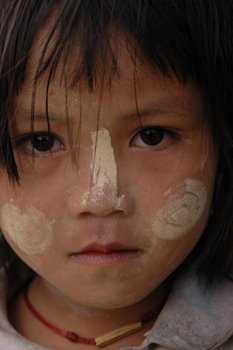
in a world of spiralling injustice and poverty, why are so many of us unconcerned, unnaffected and disconnected?
despite globalisation, it seems our worlds are becoming smaller, our perspectives narrower.
my experience working on the thai/burma border augmented in me a conviction that we mustn't let a gulf between those who are suffering greatly and the rest of us remain unchallenged.
how can we find a way of inspiring this generation to be more engaged, more active, more alert and more compassionate? how much further can each of us grow in our capacity to be kind, couragageous, and loving? I believe it is possible to build an army of young people who are inspired to stand up for the marginalised, who will defend the rights of the innocent, who will take responsibility for the future of our planet.
returning from abroad, it becomes apparent that deep set indifference is common. that is not a judgement, it just the truth. yet the onus of us to live with compassion and reject apathy has never been more vital. like apartheid, indifference is justified and defended and seen as legitimate. Just like apartheid, we must fight against it until it too is viewed as an immoral world view from a different age.
we must acknowledge that we have become too self-absorbed. we have allowed great evil to prevail without lifting a finger of protest. we simply haven't cared even though we say we do.
a values revolution is necessary. it has to be modelled by example. it has to start with you and me.
Subscribe to:
Posts (Atom)

 Posts
Posts

