13th Nov 2010
On Dec 3rd, my friend Duncan Parker and I plan to run 136 miles from Amsterdam to London. It is just over five marathons in six days – enough to stretch the body and mind to new limits. It is in part an experiment to discover what lies beneath for me when the veneer of easy living is stripped away.
That is important because I need to find ways to identify and remember that for many people, life is not comfortable.
UNICEF for example, cite that 1.2million children are trafficked each year. Children sold and transported into slavery for sexual exploitation, sweat shops, child brides, circuses, sacrificial worship, forced begging, sale of human organs, farm labour, domestic servitude. That is the antithesis of comfort. The trend is growing too – with over 2-4million people in total trafficked each year.
For many people, enduring their daily routine is much more demanding than running long distances will ever be.
I remember seeing that endurance in the eyes of a village elder called Waling when I visited Shan State in Burma several years ago. Standing on the spine of a mountain ridge with incredible vistas of Burma’s jungles, Waling told me how he had fled his village when the Burma Army had attacked. Out of 70 families, only 4 had made it to safety. Just before I finished speaking with him, I asked if he had lost any family members in the attack. He told me that his elderly parents had been too slow to leave and were burnt alive in their home.
Pain like that takes some carrying. Waling carried it without a trace of self-pity. Our conversation has stayed with me because as I returned to my life in the UK, I didn’t want indifference to corrode my soul.
So, this run is a simple way to keep me connected to people like Waling and those caught up in the murky world of traffiking. I want to send a message; I do care; I will act; their plight is not forgotten.
To support our run go to; www.justgiving.com/markdrowland
See more info; www.partnersworld.org and www.stopthetraffik.org
ENDs
Saturday, November 13, 2010


Wednesday, November 10, 2010
Monday, November 01, 2010
Why the Church should care about injustice?
Frontline Church, Liverpool 31st Oct 2010
Good morning. Its great to be back here - over a decade since I left as a student. It is great find you have lost none of your warmth, dynamism and energy.
I come here today with a simple message. It is this; that issues of justice are right at the core of the Christian faith and that the renewal of the church and our own spiritual growth depends upon the commitment we have to those issues. Social Justice is not an issue Christians can add as an optional extra - like ordering extra cheese on your pizza. It is the pizza.
I want to start with a story.
There was once a devout man who lived in a world where all religious belief was illegal. He was accused of being a follower of Christ, arrested and dragged before a court.
He had been under clandestine surveillance for some time and so the prosecution had been able to build up quite a case against him; photographs that show him attending church meetings, speaking at religious events, and participating in prayer and worship services; poems and journal entries concerning his faith; a well worn bible, with scribbles, notes, and underlinings throughout.
Once the prosecution had finished presenting the case, the judge looked deep into his eyes and began to speak;
‘Of the charges that have been brought forward, I find the accused, not guilty’. ‘Not Guilty?’. Fear and terror turn to confusion and rage. He demands that the judge gives an account concerning why he is innocent of the charges.
‘What about the poems and prose that I wrote, the services I spoke at?’ He said. ‘They simply prove that you think of yourself as a poet – evidence you are good actor perhaps - nothing more’. replied the judge. ‘But this is madness. It would seem that no evidence would convince you!’
‘Not so’ replies the judge. The court is indifferent towards your bible reading and church attendance. It has no concern with your worship with words or a pen. We exist only for those only for those who would lay down their life in an endeavour to create a better world – not describe it. They are a threat to our state. So until you live as Christ and his followers did, until you challenge this system and become a thorn in our side, until you die to yourself, then my friend, you are no enemy of ours..’
Peter Rollins
After leaving Liverpool as a student, I have had the real honour to travel across in Asia, South America and Africa and hear the stories of the poor; stories of great suffering, but stories of faith and a struggle for justice.
My first job after University was to work with the Foreign Office and the family of James Mawdsley – who was a 27 year old imprisoned in Burma for a peaceful protest against the military regime. I saw up close where a deep Christian faith and a belief in justice for the world’s poor can lead you. It’s a dangerous calling. For James, it meant 17months in solitary confinement with just a copy of the bible and Thomas A Kempis’ Imitation of Christ for company.
We eventually made ourselves enough of a nuisance that the Burmese regime released James. It was good to make use of my God-given gift to make a nuisance of myself! I had worked myself out of a job but found a vocation.
The concept of justice does not need explaining. We know it when we see its anti-thesis; injustice. I’ve seen it in the tears of my son when his Buzz Lightyear toy has been snatched from him; I’ve also seen it in the ashes of a Burmese home, burnt to the ground before an elderly grandmother had time to escape.
We need to get angry about injustice but not act in anger.
No issue of injustice is so endemic, so scandalous, so damaging than the issue of poverty. In today’s world there are a billion people living in conditions comparable to feudal Britain in the 14th century. The bottom billion of our world live in about 40 countries that instead of moving forward, are on a slow train that is decisively moving backwards. If you live in one of those countries, 14% of your children will die before they are four years old. Average life expectancy is 47.
I recently visited another of these countries. Sierra Leone only comes ahead of Niger and Afghanistan – in the UN Human Dev index. Sierra Leone is resource rich – it has diamonds, iron ore deposits, beautiful beaches. But the reason people live in poverty are rooted in its 15 years of civil war – a war that ordinary people did not ask. It is also rooted in the unequal playing field that allows Western companies to mine their precious natural resources without paying fair rates of tax that could be used to build schools, roads and hospitals. I met with executives of a mining firm in SL and they flatly refused to comply with SL’s own legislation about how much tax should be paid by mining companies. It is also rooted in the worsening climate that has seen more erratic weather conditions and lower yields for poor farmers. It complex but lets be clear. It amounts to a huge injustice.
We all need light bulb moment to shake us from accepting the world as it is. I remember that moment for me. I was visiting a village of Leffe in the Siltie region of central Ethiopia. It was the rainy season and on the surface at least, all seemed lush and fertile.
But the green vegetation flattered to deceive. The water table was dangerously low and access to clean water was a huge problem.
As I climbed up a bank, what confronted me needed to be seen to be believed. Half a dozen women are wading knee deep in turgid, brown coloured water. They were helping each other fill brightly coloured jerry cans as part of a daily routine to collect and carry the 20 litres of water they need. Buzzing mosquitoes surround them – this is a natural breeding ground for malaria, typhoid and water-borne diseases.
I spoke with one of the women, Fatima Ahmed, who was carrying her three year old daughter on her back as she collected water. She told me that she sometimes she sees worms swimming in her water but she has limited choice. The only alternative is a three hour round trip to the nearest stream. I asked her what she used the water for; she said, cooking, cleaning and drinking.
In the 21st century, women are still collecting water that could kill them.
As Bono said ‘Africa didn’t just blow my mind, it opened my mind!’ Poverty is a scandal – because it exists as a result of the active choice of the empowered and privileged. Did you know that there is more money spent on treating baldness than treating malaria? A million people die each year from malaria – 90% are children under 5 in Africa. I have to tell you that if a million American or European children were dying of malaria, we would find the money for treatment.
That is exactly why Christ gave us the prophetic mandate to address issues of justice. Christian are surely called to make choices that support the weakest not exploit or expose them.
And we know where different choices can lead. Revd Jesse Jackson was with us in London last week and he reminded me that the civil rights movement, led by the churches, created the reality in which he now lives. He now lives in a country where he no longer gets jailed for stepping into a public library. That’s justice.
There are over 2000 verses that point us to God’s view of poverty and justice. Psalm 82 3-4 is one; ‘Give justice to the weak and the orphan; maintain the right of the lowly and the destitute. Rescue the weak and the needy.’ So, the gospel is emphatically good news for society as well as the individual.
In Luke 4.18, in one Jesus’ first public pronouncements, he sets his mission statement for his ministry when he unrolls the scroll in the synagogue; ‘The Spirit of the Lord is on me, because he has anointed me to preach good news to the poor. He has sent me to proclaim freedom for the prisoners and recovery of sight for the blind, to release the oppressed.’ This was a man with a vision of spiritual and social transformation.
Theologically, there is a danger of privatising salvation to an emotional experience which fails to fully lead us into the challenge of Christ’s calling on our lives. The mystery of the gospel is that it draws us inward to understand ourselves and God and pushes outward to love and act. This is the essence of faith captured in Micah 6 8;
And what does the LORD require of you?
To act justly and to love mercy (that’s the outward process)
and to walk humbly with your God (that’s the inner life)
My reflection of my own discipleship is that it majored on the inner journey to the neglect of the outer one. We need a clear theology of justice so that we ensure it does not become relegated to an optional extra. For me this comes with an understanding that relationships at every level, individual, local, national and international, are fractured. It is from these fractured and unequal relationships that creates much of the pain and injustice we see in today’s world. Christ’s redemptive mission was to restore right relationships between Himself and His people but also between people, communities and nations.
So the relational theology brings together the inner and outer journey – something that it elusive. The Franciscan writer Richard Rohr writes ‘All of us (every church) have evaded the unmistakable teaching of Jesus’ challenge on poverty. All of us have evaded his straightforward doctrine of loving your enemy. Jesus is too much for us.’
For me, the quest for a more just world is the defining challenge of our generation. I believe that the dividing lines between churches for the next generation will not be between Protestants and Catholics or between evangelicals and liberals; I think the great distinction will be between those Christians who build issues of justice into the very DNA of their faith.
So where to start? what can we actually do? Jesus wasn’t prescriptive about how to respond. No easy answers. His use of parables left his audience an active part to find their own conclusions. And that’s the same challenge for you today but here are a few hints.
1. Courage – it always takes courage to fight injustice because you will be exposing vested interest and powerful alliances. We need courage to decide to challenge our own self-interest and make choices that carry a cost
2. Creativity - there are many options to respond; to volunteer time, perhaps giving your expertise as a trustee, to give money, to review your own carbon consumption, to buy/invest and use your money more ethically, to learn about a specific issue, to educate and inspire others, to use your voice in protest. The key is to match your God-given talents and harness them in a just cause. If you are a teacher, teach the young to fight injustice, if you are an intellectual, use it to help shape policy that will benefit the poor, if you are a writer or muscian, tell the stories of the poor.
3. Commitment – we have to decide to do something. To reject indifference and align our values, choices and actions.
Just like the man in the story we have to make sure we are ‘not too busy doing church work that we fail to do the work of the church’.
Good morning. Its great to be back here - over a decade since I left as a student. It is great find you have lost none of your warmth, dynamism and energy.
I come here today with a simple message. It is this; that issues of justice are right at the core of the Christian faith and that the renewal of the church and our own spiritual growth depends upon the commitment we have to those issues. Social Justice is not an issue Christians can add as an optional extra - like ordering extra cheese on your pizza. It is the pizza.
I want to start with a story.
There was once a devout man who lived in a world where all religious belief was illegal. He was accused of being a follower of Christ, arrested and dragged before a court.
He had been under clandestine surveillance for some time and so the prosecution had been able to build up quite a case against him; photographs that show him attending church meetings, speaking at religious events, and participating in prayer and worship services; poems and journal entries concerning his faith; a well worn bible, with scribbles, notes, and underlinings throughout.
Once the prosecution had finished presenting the case, the judge looked deep into his eyes and began to speak;
‘Of the charges that have been brought forward, I find the accused, not guilty’. ‘Not Guilty?’. Fear and terror turn to confusion and rage. He demands that the judge gives an account concerning why he is innocent of the charges.
‘What about the poems and prose that I wrote, the services I spoke at?’ He said. ‘They simply prove that you think of yourself as a poet – evidence you are good actor perhaps - nothing more’. replied the judge. ‘But this is madness. It would seem that no evidence would convince you!’
‘Not so’ replies the judge. The court is indifferent towards your bible reading and church attendance. It has no concern with your worship with words or a pen. We exist only for those only for those who would lay down their life in an endeavour to create a better world – not describe it. They are a threat to our state. So until you live as Christ and his followers did, until you challenge this system and become a thorn in our side, until you die to yourself, then my friend, you are no enemy of ours..’
Peter Rollins
After leaving Liverpool as a student, I have had the real honour to travel across in Asia, South America and Africa and hear the stories of the poor; stories of great suffering, but stories of faith and a struggle for justice.
My first job after University was to work with the Foreign Office and the family of James Mawdsley – who was a 27 year old imprisoned in Burma for a peaceful protest against the military regime. I saw up close where a deep Christian faith and a belief in justice for the world’s poor can lead you. It’s a dangerous calling. For James, it meant 17months in solitary confinement with just a copy of the bible and Thomas A Kempis’ Imitation of Christ for company.
We eventually made ourselves enough of a nuisance that the Burmese regime released James. It was good to make use of my God-given gift to make a nuisance of myself! I had worked myself out of a job but found a vocation.
The concept of justice does not need explaining. We know it when we see its anti-thesis; injustice. I’ve seen it in the tears of my son when his Buzz Lightyear toy has been snatched from him; I’ve also seen it in the ashes of a Burmese home, burnt to the ground before an elderly grandmother had time to escape.
We need to get angry about injustice but not act in anger.
No issue of injustice is so endemic, so scandalous, so damaging than the issue of poverty. In today’s world there are a billion people living in conditions comparable to feudal Britain in the 14th century. The bottom billion of our world live in about 40 countries that instead of moving forward, are on a slow train that is decisively moving backwards. If you live in one of those countries, 14% of your children will die before they are four years old. Average life expectancy is 47.
I recently visited another of these countries. Sierra Leone only comes ahead of Niger and Afghanistan – in the UN Human Dev index. Sierra Leone is resource rich – it has diamonds, iron ore deposits, beautiful beaches. But the reason people live in poverty are rooted in its 15 years of civil war – a war that ordinary people did not ask. It is also rooted in the unequal playing field that allows Western companies to mine their precious natural resources without paying fair rates of tax that could be used to build schools, roads and hospitals. I met with executives of a mining firm in SL and they flatly refused to comply with SL’s own legislation about how much tax should be paid by mining companies. It is also rooted in the worsening climate that has seen more erratic weather conditions and lower yields for poor farmers. It complex but lets be clear. It amounts to a huge injustice.
We all need light bulb moment to shake us from accepting the world as it is. I remember that moment for me. I was visiting a village of Leffe in the Siltie region of central Ethiopia. It was the rainy season and on the surface at least, all seemed lush and fertile.
But the green vegetation flattered to deceive. The water table was dangerously low and access to clean water was a huge problem.
As I climbed up a bank, what confronted me needed to be seen to be believed. Half a dozen women are wading knee deep in turgid, brown coloured water. They were helping each other fill brightly coloured jerry cans as part of a daily routine to collect and carry the 20 litres of water they need. Buzzing mosquitoes surround them – this is a natural breeding ground for malaria, typhoid and water-borne diseases.
I spoke with one of the women, Fatima Ahmed, who was carrying her three year old daughter on her back as she collected water. She told me that she sometimes she sees worms swimming in her water but she has limited choice. The only alternative is a three hour round trip to the nearest stream. I asked her what she used the water for; she said, cooking, cleaning and drinking.
In the 21st century, women are still collecting water that could kill them.
As Bono said ‘Africa didn’t just blow my mind, it opened my mind!’ Poverty is a scandal – because it exists as a result of the active choice of the empowered and privileged. Did you know that there is more money spent on treating baldness than treating malaria? A million people die each year from malaria – 90% are children under 5 in Africa. I have to tell you that if a million American or European children were dying of malaria, we would find the money for treatment.
That is exactly why Christ gave us the prophetic mandate to address issues of justice. Christian are surely called to make choices that support the weakest not exploit or expose them.
And we know where different choices can lead. Revd Jesse Jackson was with us in London last week and he reminded me that the civil rights movement, led by the churches, created the reality in which he now lives. He now lives in a country where he no longer gets jailed for stepping into a public library. That’s justice.
There are over 2000 verses that point us to God’s view of poverty and justice. Psalm 82 3-4 is one; ‘Give justice to the weak and the orphan; maintain the right of the lowly and the destitute. Rescue the weak and the needy.’ So, the gospel is emphatically good news for society as well as the individual.
In Luke 4.18, in one Jesus’ first public pronouncements, he sets his mission statement for his ministry when he unrolls the scroll in the synagogue; ‘The Spirit of the Lord is on me, because he has anointed me to preach good news to the poor. He has sent me to proclaim freedom for the prisoners and recovery of sight for the blind, to release the oppressed.’ This was a man with a vision of spiritual and social transformation.
Theologically, there is a danger of privatising salvation to an emotional experience which fails to fully lead us into the challenge of Christ’s calling on our lives. The mystery of the gospel is that it draws us inward to understand ourselves and God and pushes outward to love and act. This is the essence of faith captured in Micah 6 8;
And what does the LORD require of you?
To act justly and to love mercy (that’s the outward process)
and to walk humbly with your God (that’s the inner life)
My reflection of my own discipleship is that it majored on the inner journey to the neglect of the outer one. We need a clear theology of justice so that we ensure it does not become relegated to an optional extra. For me this comes with an understanding that relationships at every level, individual, local, national and international, are fractured. It is from these fractured and unequal relationships that creates much of the pain and injustice we see in today’s world. Christ’s redemptive mission was to restore right relationships between Himself and His people but also between people, communities and nations.
So the relational theology brings together the inner and outer journey – something that it elusive. The Franciscan writer Richard Rohr writes ‘All of us (every church) have evaded the unmistakable teaching of Jesus’ challenge on poverty. All of us have evaded his straightforward doctrine of loving your enemy. Jesus is too much for us.’
For me, the quest for a more just world is the defining challenge of our generation. I believe that the dividing lines between churches for the next generation will not be between Protestants and Catholics or between evangelicals and liberals; I think the great distinction will be between those Christians who build issues of justice into the very DNA of their faith.
So where to start? what can we actually do? Jesus wasn’t prescriptive about how to respond. No easy answers. His use of parables left his audience an active part to find their own conclusions. And that’s the same challenge for you today but here are a few hints.
1. Courage – it always takes courage to fight injustice because you will be exposing vested interest and powerful alliances. We need courage to decide to challenge our own self-interest and make choices that carry a cost
2. Creativity - there are many options to respond; to volunteer time, perhaps giving your expertise as a trustee, to give money, to review your own carbon consumption, to buy/invest and use your money more ethically, to learn about a specific issue, to educate and inspire others, to use your voice in protest. The key is to match your God-given talents and harness them in a just cause. If you are a teacher, teach the young to fight injustice, if you are an intellectual, use it to help shape policy that will benefit the poor, if you are a writer or muscian, tell the stories of the poor.
3. Commitment – we have to decide to do something. To reject indifference and align our values, choices and actions.
Just like the man in the story we have to make sure we are ‘not too busy doing church work that we fail to do the work of the church’.
Tuesday, July 06, 2010
The Scandal of Sweet Home Farm

It was the morning after the dreadful night before and I was making my way with my best mate in a gold, rust-ridden 1985 Volkswagen Passat into one of South Africa’s informal settlements – Sweet Home Farm.
We hadn’t even driven round the first corner when the young boys from the community spotted our car. Worse, they knew we were English. Before you could even utter the words ‘goal-line technology’, these boys were running up to the car laughing and holding up four fingers with one hand and just one solitary finger with the other. ‘Germany 4; England 1’, they shouted with glee. And with that went my faint hope that this might be the one place where that news had filtered through...
But if I needed a perspective for my football blues, I had come to the right place. Sweet Home Farm is one of 323 informal settlements in Cape Town. It is located East of Cape Town's Southern Suburbs within the district of Philippi. The settlement started in 1995 on a rubbish dump when 12 families arrived from the Eastern Cape – looking for the promise of work in the aftermath of apartheid. Today, there are 17,000 people in Sweet Home Farm. The result of this massive urban migration (some one million have arrived in Cape Town since 1994) is an unemployment rate of up to 70%. The consequence is predictable; grinding poverty.
The constitution of South Africa confers the right for families to stay in a location unless the government can provide a suitable alternative. In the case of Sweet Home Farm, no alternative has been given. But the people live in a legal limbo land. An informal settlement means that residents don’t enjoy the same privileges as those living in formal settlements . For example, it took Cape Town City Council ten years to provide any toilets in Sweet Home Farm and basic water points have only just been provided. Only in formal settlements can families attain the title deeds in order to own a plot of land and then your own home. Home ownership is one of the main ways poor families can pass on a better hope for their children’s future. As Joy Klimbashe – the co-ordinator for the SHF team which works through 'The Warehouse' charity - put it, ‘if people have a home, it brings dignity and dignity changes people’s mindset – suddenly they have rights.’
I asked Joy why on earth the government hadn’t designated Sweet Home Farm a formal settlement so that the community could start to develop? He told me that the issue comes down to two men in Johannesburg who own half the land and have so far refused to sell it to the government. If the land isn’t municipally owned, then it cannot be declared a formal settlement.
My reaction? Appalled. Apalled that two men could halt the progress and development for 17,000 people. Appalled by the apparent desparate lack of urgency on behalf of the City Council to resolve an issue that has been rolling for a decade. Appalled that the power of the wealthy could be used to undermine the future of the poor.
However, hope is a renewable energy resource that is still there to be harnessed. The Warehouse is one of the few organisations committed to seeing the development of Sweet Home Farm. They have also identified a window of opportunity. In 2011, there are local government elections in Cape Town. It is a chance to put the scandal of Sweet Home Farm firmly on the local political agenda. A targeted and determined advocacy campaign to see the city authorities designate Sweet Home Farm a formal settlement is needed alongside work to mobilise community leadership from within Sweet Home Farm to articulate their own struggle.
That is much easier said than done. But in a country that has defeated apartheid, you have to believe that it is within the realms of possibility to see Sweet Home Farm transformed into a entitled, represented and even prosperous community. Gaining formal settlement status is the critical first step and like England’s goal that wasn’t against Germany, there is no sensible reason why the authorities haven't allowed this.
Thursday, December 10, 2009
Saturday, February 14, 2009
Memoirs from North Korea - Day 1

From Feb 3rd-7th I joined a parliamentary delegation visiting the Democratic People's Republic of Korea (DPRK) headed by Lord Alton and Baroness Cox. Here is my daily account:
Feb 3rd
As we touched down in North Korea, the landscape appeared barren and brown. Although the sun was shining, the lakes were frozen over as a result of minus 13 degree conditions the week before. From the plane you could see small silhouettes of people skating on the ice. However, my concerns over a frosty reception were allayed when we were met on the tarmac by an enthusiastic welcoming committee, including the DPRK Ambassador.
We were ushered into the VIP lounge in which we exchanged pleasantries. After a few minutes, we were asked to hand over our mobile phones。 Although not unexpected, this was a reality check for me。 With my digital umbilical chord temporarily severed, I was driven to our hotel in a brown 1960s Mercedes. Its beige seats and flannel covered steering wheel were symbolic of the fact that time too had frozen here.
On the road to Pyongyang, we passed ordered villages built in symmetrical rows. We were told that in Pyongyang everyone had jobs, a house and enough to eat. However, outside the bubble of the capital, life was much starker. The separation with the south has meant that the North can't easily afford to feed its own people. As a result, almost 2million people died of food shortages in the 1990s and still more than 37% of six year olds in North Korea are chronically malnourished.
We arrived at our splendid Koryo Hotel and unpacked bags. Baroness Cox and I went for a walk before dinner. After a few minutes we realised we had been tracked down by our North Korean guide. He told us it was not possible for us to walk alone。 We witnessed a quiet city full of greying high rise apartment blocks and ordinary people who kept their heads down as they walked past, shy of catching your eye.
We returned from our walk for a formal dinner at the hotel。 The setting was almost opulent. After a series of speeches and course after course of food, the conversation drifted to anecdotes of the North Korean's visit to London. Apparently our host had visited the Tower of London in 1989 for a reception and parked his car in the space reserved for Lady Thatcher! He said he had been invited to the UK by a young Scottish, Labour MP. No-one could think who that would have been. 'Scottish…Labour MP?' I ventured, 'it wasn't Gordon Brown was it?' They seemed to get the joke.
The night ended with a coffee with the newly installed British Ambassador. he was obviously knowledgeable and very supportive of our visit to North Korea.
Memoirs from North Korea - Day 2

Feb 4th
The first full day started with a visit to the birth place of North Korea's Great Leader. Born in the woods around Pyongyang, Kim Il Sung had gone on to liberate Korea from the Japanese in 1945. Although his son Kim Jong Il has taken power since his death in 1994, Kim Il Sung is still considered the immortal leader of North Korea and is revered by all who live in the North.
We left the woodlands to attend a meeting with DPRK ambassador. He expressed real sadness that relations with South Korea had deteriorated badly in recent months and at one point said 'there is no telling how bad this situation can get – our soldiers are angry and indignant'. A new harder line government has won power in the South and is now insisting on new conditions before engaging. For the North, this is seen as reneging on previous bi-lateral agreements and an act of provocation by the South.
The second meeting followed soon after with the business sector. These 9 men responsible for running North Korea's big business. They talked proudly of the export, manufacturing and IT sectors in which they work. Although there is no private sector in DPRK since everything from restaurants to railways is state-owned, they know that foreign investment is critical to the country's future prosperity. We saw at least two covered markets in Pyongyang which suggested some that some liberalisation has taken place.
The next meeting was with the Minister for Foreign Affairs, Mr Kung Sok Ung. After exchanging pleasantries, David Alton asked Mr Sok about reports we had seen of North Koreans dying in their attempts to flee the border and about the conditions in the prison camps where at least 200,000 are reportedly held. Finally, he raised the level of military spending in North Korea - 30% of the county's GDP and asked if this could be better used in other areas. Mr Sok refuted the claims over human rights abuses as Western propaganda and branded all 'defectors' from North Korea as criminals (something David Alton countered because he had met at least one escapee who had been born in the camps). Although Mr Sok said he would welcome further assistance on the food security question, he repeated the mantra that while hostile relations with the US and the South remained, a strong military was essential.
I was impressed by David Alton's skill in surpassing platitudes without losing a sense of respect for our hosts. Politicians have too often been given a bad name but it is impressive to see the 'dark arts' deployed to such good effect.
The day ended with dinner at the invitation of a few of the embassy staff and a small number expats that are teaching English in Pyongyang - we ate fine food and drank beer before I retreated to bed.
Memoirs from North Korea - Day 3

Feb 5th
In the morning we went to see the body of Kim Il Sung lying in state. This is not the place to describe what one sees there – suffice to say that it will remain with me for many years to come.
We left the mausoleum for the more enlivened environment of Kim Il Sung University. We were welcomed to an excellent English class where a dynamic teacher was instructing a very attentive class. Of course we had to take our turn in addressing the class but it was refreshing to see the students eagerness to learn and enthusiasm to absorb as much information as possible. If students were like this in the UK, the teaching profession would be dream vocation.
After lunch we had a meeting with the highest ranking member of the authorities on our itinerary - the Speaker at the Supreme People's Assembly. He had a calm presence and kind eyes and carried a statesmanlike air about him. He welcomed us warmly although repeated the credo about building up a powerful and prosperous nation and how their 'military first' strategy was the highest priority. Our discussion centred on how we can help North Korea move towards, not away from, the international community as means of achieving their goals for the prosperity of their country.
After our visit to the children's palace to see a celebration of the Lunar festival, I understood something of what sustains the North Korean system。 Children filled the stage and performed breathtaking gymnastic, scintillating piano concertos and wonderful dance routines which would have put my school panto firmly in the shade. But they also sang songs of devotion to The Great Leader that made your realise how quickly a person's view of the world can be set in place.
We finished our day with what can only be described as banquet with the Speaker of the Korean parliament. I counted that we were served eleven courses from trout to pheasant dishes. Baroness Cox recounted the story of Churchill, who was no fan of women in politics, but was once told by the first female member of parliament 'Winston, if I was your husband, I would put poison in your coffee.' To which Churchill replied, 'madam, if I was your husband, I would drink it!' Our Korean hosts were almost bent double with laughter.
Memoir of North Korea - Day 4

Feb 6th
We finished our time in North Korea with a visit to the beautiful mountains North of Pyongyang. We visited a museum - perhaps the only one in the world - which contains hundreds of gifts from the leaders of nations who wanted to honour the life of the late Kim Il Sung. Gifts from a list of leaders including Stalin, Tito, Mugabe, Honeker, Chairman Mao, Castro, Ceausescu were a sobering reminder of the lure of totalitarianism that defined the last century.
We took the opportunity to visit churches – Protestant, Catholic and Orthodox which are starting to emerge – and we impressed upon those we met the importance of allowing religious liberty to prevail. Some progress has been made in terms of them being able to build new buildings which was positive. The priests we did meet talked enthusiastically about their congregations though clearly allegiance to Kim Jung Il is a prerequisite for all in North Korea. It wasn't clear how easy it is for ordinary citizens to practice their faith freely.
Our last meal in North Korea was dinner at the revolving restaurant at the top of the Koyro hotel。 It was an opportunity to thank our hosts。 I made a speech in which I admitted that I had come to the country with that attitude 'that I thought I knew what is best for North Korea'. I felt it important to express how humbled I had been by the sincerity and kindness with which we had been received. I hadn’t expected it but my comfortable preconceptions had been challenged.
I went onto say that there is a big job to do if we are to build a more peaceful and equitable world. We would all need to be willing to learn from each other.
Saturday, January 31, 2009
10 things you might not know about North Korea
Next week, I am visiting one of the most closed countries on earth – it is one of the few remaining Stalinist states. Here are a few key facts:
1. After a half century of isolation, North Korea remains has one of the largest standing armies in the world.
2. 80,000 South Korean civilians are thought to have been abducted by North Korea during the Korean war (1950-53)
3. In 1994, The Great Leader Kim Il Sung died after 50 years of undiluted power.
4. Succession went to Kim’s son Kim Jong-il – a man whose birth was apparently marked by a sightings of a double rainbow and a new star
5. An estimated 2 million people died from food shortages in North Korea during the 1990s.
6. In 2002 US President George W Bush named the country as part of an "axis of evil"
7. In 2006, North Korea became the ninth country to possess nuclear weapons
8. In June 2008, the authorities in the capital Pyongang finally handed over a list of the country's nuclear assets and in the October agreed to give international inspectors full access to its nuclear sites
9. Military spending is still 20% of GDP
10. There is no internet connection in North Korea
1. After a half century of isolation, North Korea remains has one of the largest standing armies in the world.
2. 80,000 South Korean civilians are thought to have been abducted by North Korea during the Korean war (1950-53)
3. In 1994, The Great Leader Kim Il Sung died after 50 years of undiluted power.
4. Succession went to Kim’s son Kim Jong-il – a man whose birth was apparently marked by a sightings of a double rainbow and a new star
5. An estimated 2 million people died from food shortages in North Korea during the 1990s.
6. In 2002 US President George W Bush named the country as part of an "axis of evil"
7. In 2006, North Korea became the ninth country to possess nuclear weapons
8. In June 2008, the authorities in the capital Pyongang finally handed over a list of the country's nuclear assets and in the October agreed to give international inspectors full access to its nuclear sites
9. Military spending is still 20% of GDP
10. There is no internet connection in North Korea
Tuesday, December 30, 2008
Boxing Day at Crisis 2008
By the time I completed my third and final day volunteering at Crisis, I was starting to develop my own ideas about how the day centre could be run...
Some of the guests had expressed unhappiness at management’s insistence that guests showered before they were able to take advantage of the massage services on offer. I agreed and took this up with some of the ‘green badge’ supervisors. It seemed altogether the wrong message that we considered guests to be in some way unclean – especially as some of the guests were cleaner than the volunteers!
My many hours on security had also convinced me that we needed to take a harder line on preventing alcohol into the centre. The day before (Christmas Day) the police had arrived as trouble started to brew between guests. It was all drink related and I thought that was entirely preventable with a zero tolerance approach to allowing alcohol onto the premises.
But given that this was my last day, I thought I better concentrate my efforts on engaging the people I had come to serve. My answer was Chess.
It didn’t matter what country guests came from, chess was universally understood and could be played regardless of an individuals grasp of English.
My miserable defeat to one of the guests exposed my own prejudice. When we started, I assumed the ragged looking man opposite probably couldn’t tell his bishop from his knight. How wrong I was! It was actually embarrassing as he took my Queen without reply and set about cutting through my defences with consummate ease. What frustrated me was the speed with which he made his moves – I didn’t have time to think!
The highlight of my final day was meeting and talking to George. George was a statesmanlike Jamaican born man in his fifties who looked a little like Morgan Freeman. He was the most articulate person I can remember meeting. It wasn’t long before I was recommending that he run for London Mayor!
What I found absorbing about him was his twinkling eyes and that he would lightly touch your arm every time he wanted to make a point. He rattled through his views on European integration, immigration, culture, economics and the war in Iraq. With souring rhetoric, he concluded one monologue about terrorism which was punctuated with emphatic hand gestures, saying, ‘you see, we must take a stand, we must take a stand.’
So I finished my time with Crisis. I was certainly uplifted, surprised and inspired by the buoyancy of the individuals I had met. I had found little trace of self-pity – just a group of people who had come up against life’s harshest realities and were busy trying to survive.
Some of the guests had expressed unhappiness at management’s insistence that guests showered before they were able to take advantage of the massage services on offer. I agreed and took this up with some of the ‘green badge’ supervisors. It seemed altogether the wrong message that we considered guests to be in some way unclean – especially as some of the guests were cleaner than the volunteers!
My many hours on security had also convinced me that we needed to take a harder line on preventing alcohol into the centre. The day before (Christmas Day) the police had arrived as trouble started to brew between guests. It was all drink related and I thought that was entirely preventable with a zero tolerance approach to allowing alcohol onto the premises.
But given that this was my last day, I thought I better concentrate my efforts on engaging the people I had come to serve. My answer was Chess.
It didn’t matter what country guests came from, chess was universally understood and could be played regardless of an individuals grasp of English.
My miserable defeat to one of the guests exposed my own prejudice. When we started, I assumed the ragged looking man opposite probably couldn’t tell his bishop from his knight. How wrong I was! It was actually embarrassing as he took my Queen without reply and set about cutting through my defences with consummate ease. What frustrated me was the speed with which he made his moves – I didn’t have time to think!
The highlight of my final day was meeting and talking to George. George was a statesmanlike Jamaican born man in his fifties who looked a little like Morgan Freeman. He was the most articulate person I can remember meeting. It wasn’t long before I was recommending that he run for London Mayor!
What I found absorbing about him was his twinkling eyes and that he would lightly touch your arm every time he wanted to make a point. He rattled through his views on European integration, immigration, culture, economics and the war in Iraq. With souring rhetoric, he concluded one monologue about terrorism which was punctuated with emphatic hand gestures, saying, ‘you see, we must take a stand, we must take a stand.’
So I finished my time with Crisis. I was certainly uplifted, surprised and inspired by the buoyancy of the individuals I had met. I had found little trace of self-pity – just a group of people who had come up against life’s harshest realities and were busy trying to survive.
Saturday, December 27, 2008
Christmas Day at Crisis 2008
My second day at Broadway Centre felt very different from the first. By now, I felt like a veteran of the system. I generously helped to give guidance to volunteer virgins who looked as disorientated as I did on my first day. The absence of public transport meant that I had cycled for an hour in quiet London streets to arrive at Shepherds Bush and the exercise had put a spring in my step.
It struck me throughout the day that the Crisis centres are set up at Christmas as much to benefit the volunteers as they are for the guests. Everyone of the 40 volunteers had their own reasons for being there. One volunteer from Sunderland told me that she had lost her husband six months ago. Another volunteer was there to escape the spectre of another family Christmas. For me, the main driver was to find an antidote to the self-pity that threatened set in because I couldn’t spend Christmas with my own family.
From that perspective, the guests are very gracious. They sense the vulnerability of the volunteers who want to engage.
After I finished my morning security shift, I got a cup of tea and sat down in the café. I started chatting with Noel – an Irish guest who must have been in his late 60s and had spent 15 years sleeping rough in some of the toughest areas of London and Birmingham. He hadn't seen his wife and children for 25 years but he said he would never stop loving his wife, as long as he lived. His face and hands were badly scarred from what look like severe burns. Although he wore dark glasses, his piercing blue eyes would look at you over the top of his frames when he wanted to be sure you were listening.
I made the mistake of straying onto the issues of politics with Noel. In no time at all, Noel was expressing his apoplectic anger at the sight of Polish and other immigrants who were diluting British culture and using services that they had never contributed to. The issues he raised were a common theme that emerged from guests who felt the help on offer was not reaching the people who really needed it. The tension between the Eastern European guests – many of whom were much younger– and the ‘local’ guests was palpable.
I decided to chance my arm at connecting with some of the Polish guests. It was much tougher. Many could barely speak English. They could play table tennis however. I confidently challenged one guest to a game. Unfortunately, I lost pretty quickly to a Pole who I can only assume must have been a table tennis champion in his home town!
The day finished with an uplifting debrief where we heard Edwin’s story – a volunteer who had almost died on the streets but who had literally been saved by visiting a Crisis Centre. He now gone 14 years without a drink and there was no more powerful advocate for the value of the work Crisis does.
It struck me throughout the day that the Crisis centres are set up at Christmas as much to benefit the volunteers as they are for the guests. Everyone of the 40 volunteers had their own reasons for being there. One volunteer from Sunderland told me that she had lost her husband six months ago. Another volunteer was there to escape the spectre of another family Christmas. For me, the main driver was to find an antidote to the self-pity that threatened set in because I couldn’t spend Christmas with my own family.
From that perspective, the guests are very gracious. They sense the vulnerability of the volunteers who want to engage.
After I finished my morning security shift, I got a cup of tea and sat down in the café. I started chatting with Noel – an Irish guest who must have been in his late 60s and had spent 15 years sleeping rough in some of the toughest areas of London and Birmingham. He hadn't seen his wife and children for 25 years but he said he would never stop loving his wife, as long as he lived. His face and hands were badly scarred from what look like severe burns. Although he wore dark glasses, his piercing blue eyes would look at you over the top of his frames when he wanted to be sure you were listening.
I made the mistake of straying onto the issues of politics with Noel. In no time at all, Noel was expressing his apoplectic anger at the sight of Polish and other immigrants who were diluting British culture and using services that they had never contributed to. The issues he raised were a common theme that emerged from guests who felt the help on offer was not reaching the people who really needed it. The tension between the Eastern European guests – many of whom were much younger– and the ‘local’ guests was palpable.
I decided to chance my arm at connecting with some of the Polish guests. It was much tougher. Many could barely speak English. They could play table tennis however. I confidently challenged one guest to a game. Unfortunately, I lost pretty quickly to a Pole who I can only assume must have been a table tennis champion in his home town!
The day finished with an uplifting debrief where we heard Edwin’s story – a volunteer who had almost died on the streets but who had literally been saved by visiting a Crisis Centre. He now gone 14 years without a drink and there was no more powerful advocate for the value of the work Crisis does.
Friday, December 26, 2008
Christmas Eve at Crisis 2008
This Christmas, I decided to volunteer at the Broadway Centre for the homeless with Crisis.
Like starting anything for the first time, it takes a while to find one’s feet. As my two year old boy would say ‘it is a little bit scary.’
The day began with a short induction – 24 volunteers crammed into a smelly room. None of us had met before and with next to no training we were being tasked with running a day centre for 100 guests over Christmas. After some rather poor jokes aimed at breaking the ice, our team leader started allocating tasks.
My first shift was on security. The first guy that walked past told me that he thought I was a sanctimonious middle class do-gooder. He probably had it right.
Anyway, I was kitted up with a radio and told to monitor who was coming in and out. It was freezing. Just when I was beginning to think this was a complete waste of my time, two guests, David and Wayne showed up.
David was a hooded 25 year old who looked like he was in his mid 30s. He had a quiet demeanour although you could tell that, like a volcano, any eruption would be quite dramatic. David told me that he had spent the last three weeks on the streets. In that time he had been assaulted twice – leaving him with stitches in his head which he proudly showed me.
Like most people who end up on the streets, David was heart broken. He had split up with his girlfriend who had disappeared with their 9month old daughter. The council had told him that due to his criminal record, David was a ‘danger to his own daughter’ despite the fact that he had seen his partner hold a knife to his daughter’s throat. He was coming to terms his enforced estrangement from his family – with absolutely no power to address the situation.
David’s friend Wayne was a little more inebriated. Clutching a tin of cider, Wayne was busy confessing his undying love to my security colleague, ‘the beautiful Ellen’. His love was evidenced when he ran off to the shops and used his scant resources to buy Ellen a box of Ferrero Roche. Quite a gesture.
After two hours on the door, I moved inside and listened to a talented musician entertaining the guests with moving covers of Leonard Cohen’s Hallelujah and David Gray’s Babylon. I met two more guests who described themselves as the old gents fo the centre. One was a totally toothless Scottish guy called Gordon (he advised me to look after my teeth while I still had them) and his pal David – another David – who was a former employee of the Bank of England (from 1963 to 1976 he told me). These guys were great company – the kind of individuals who you felt had a much deeper understanding of the way the world worked than I would ever obtain.
I resisted the temptation to grab the mike and entertain the guests with a few tracks of my own and decided instead to help out in the kitchen. The ladies in the kitchen were impressed with my mopping skills. I had to let them know that I wasn’t this good at home and that really I was just a show-pony. So that became my nick-name for the rest of the day. I thought ‘Mark the show-pony’ was rather apt.
Like starting anything for the first time, it takes a while to find one’s feet. As my two year old boy would say ‘it is a little bit scary.’
The day began with a short induction – 24 volunteers crammed into a smelly room. None of us had met before and with next to no training we were being tasked with running a day centre for 100 guests over Christmas. After some rather poor jokes aimed at breaking the ice, our team leader started allocating tasks.
My first shift was on security. The first guy that walked past told me that he thought I was a sanctimonious middle class do-gooder. He probably had it right.
Anyway, I was kitted up with a radio and told to monitor who was coming in and out. It was freezing. Just when I was beginning to think this was a complete waste of my time, two guests, David and Wayne showed up.
David was a hooded 25 year old who looked like he was in his mid 30s. He had a quiet demeanour although you could tell that, like a volcano, any eruption would be quite dramatic. David told me that he had spent the last three weeks on the streets. In that time he had been assaulted twice – leaving him with stitches in his head which he proudly showed me.
Like most people who end up on the streets, David was heart broken. He had split up with his girlfriend who had disappeared with their 9month old daughter. The council had told him that due to his criminal record, David was a ‘danger to his own daughter’ despite the fact that he had seen his partner hold a knife to his daughter’s throat. He was coming to terms his enforced estrangement from his family – with absolutely no power to address the situation.
David’s friend Wayne was a little more inebriated. Clutching a tin of cider, Wayne was busy confessing his undying love to my security colleague, ‘the beautiful Ellen’. His love was evidenced when he ran off to the shops and used his scant resources to buy Ellen a box of Ferrero Roche. Quite a gesture.
After two hours on the door, I moved inside and listened to a talented musician entertaining the guests with moving covers of Leonard Cohen’s Hallelujah and David Gray’s Babylon. I met two more guests who described themselves as the old gents fo the centre. One was a totally toothless Scottish guy called Gordon (he advised me to look after my teeth while I still had them) and his pal David – another David – who was a former employee of the Bank of England (from 1963 to 1976 he told me). These guys were great company – the kind of individuals who you felt had a much deeper understanding of the way the world worked than I would ever obtain.
I resisted the temptation to grab the mike and entertain the guests with a few tracks of my own and decided instead to help out in the kitchen. The ladies in the kitchen were impressed with my mopping skills. I had to let them know that I wasn’t this good at home and that really I was just a show-pony. So that became my nick-name for the rest of the day. I thought ‘Mark the show-pony’ was rather apt.
Wednesday, December 24, 2008
From Faith to Ideology
The Mumbai terror attacks last month are ample ammunition for some to point to the destructive and divisive role of religion in the world today.
In some respects, I agree. The single biggest threat to peace between peoples of the world is the journey from faith to ideology. It is the distortion of religious thought and spiritual manipulation that cannot be underestimated in its explosive power to breed enmity.
That is what has been happening in the southern states of Pakistan where the major it the Mumbai killers have come from. It is not that the political situation in Kashmir or the crushing urban poverty has driven these men to calmly walk into cafes, hotels and community centres and wantonly kill. It is a brittle and narrow belief system that leads individuals to apocalyptic conclusions about the future and a delusional sense of the importance of their own contribution to the struggle.
This comes to the heart of the distinction between faith and ideology. Religious faith is an essentially humble commitment to a spiritual journey that brings opportunity to find reference points to understand God and give meaning to the complexity of our own existence. Ideology is a fixed world view – set of hard-wired beliefs that is less about spiritual growth than about controlling peoples behaviour and thinking from an individual to societal level.
When Muslim men in Pakistan and Bangladesh throw acid into the eyes of women as is increasingly common in agricultural heartlands such as the Punjab state; that is ideology at work. When Protestant gangs in Northern Ireland take a hammer to another (Catholic) man’s knee and render him unable to walk for a lifetime; that is ideology at work. When individuals fail to countenance any possibility that they could be wrong or could learn from those of different tradition; that is ideology at work.
But when men like Martin Luther King sustain their campaign for civil rights in America – knowing that it could end his own life prematurely; that is faith at work. When women like Aung San Suu Kyi refuse to take a loaded offer to leave Burma and visit her dying husband, Michael Aris, in the UK – because she knew the ruling junta wouldn’t let her return; that is faith in action. And when ordinary individuals choose to open their homes and hearts to others at Christmas; that is faith in action.
Although ideology often masquerades as faith, the two are quite different. It is my view that genuine religious faith has been the inspiration behind some of the greatest individuals who have ever lived. Genuine faith has the power to release individuals to be the best the best they can be. It stands to reason perhaps that ideology also has the power to deceive people into being the worst they can be too.
What we need to do examine ourselves – how far have we gone in turning our faith into an ideology?
In some respects, I agree. The single biggest threat to peace between peoples of the world is the journey from faith to ideology. It is the distortion of religious thought and spiritual manipulation that cannot be underestimated in its explosive power to breed enmity.
That is what has been happening in the southern states of Pakistan where the major it the Mumbai killers have come from. It is not that the political situation in Kashmir or the crushing urban poverty has driven these men to calmly walk into cafes, hotels and community centres and wantonly kill. It is a brittle and narrow belief system that leads individuals to apocalyptic conclusions about the future and a delusional sense of the importance of their own contribution to the struggle.
This comes to the heart of the distinction between faith and ideology. Religious faith is an essentially humble commitment to a spiritual journey that brings opportunity to find reference points to understand God and give meaning to the complexity of our own existence. Ideology is a fixed world view – set of hard-wired beliefs that is less about spiritual growth than about controlling peoples behaviour and thinking from an individual to societal level.
When Muslim men in Pakistan and Bangladesh throw acid into the eyes of women as is increasingly common in agricultural heartlands such as the Punjab state; that is ideology at work. When Protestant gangs in Northern Ireland take a hammer to another (Catholic) man’s knee and render him unable to walk for a lifetime; that is ideology at work. When individuals fail to countenance any possibility that they could be wrong or could learn from those of different tradition; that is ideology at work.
But when men like Martin Luther King sustain their campaign for civil rights in America – knowing that it could end his own life prematurely; that is faith at work. When women like Aung San Suu Kyi refuse to take a loaded offer to leave Burma and visit her dying husband, Michael Aris, in the UK – because she knew the ruling junta wouldn’t let her return; that is faith in action. And when ordinary individuals choose to open their homes and hearts to others at Christmas; that is faith in action.
Although ideology often masquerades as faith, the two are quite different. It is my view that genuine religious faith has been the inspiration behind some of the greatest individuals who have ever lived. Genuine faith has the power to release individuals to be the best the best they can be. It stands to reason perhaps that ideology also has the power to deceive people into being the worst they can be too.
What we need to do examine ourselves – how far have we gone in turning our faith into an ideology?
Sunday, November 16, 2008
Finding Solace
A few weeks ago I heard a story about a Rwandan choir who needed help. I was immediately intrigued. The choir in question is the Solace Praise Choir – a gospel choir made up of young people who have been orphaned either through the 1994 genocide or its related cousin – the HIV pandemic.
The choir formed because of the work of Solace Ministries which I visited in 2004 and has been providing exemplary vocational training as well as emotional and spiritual support for traumatised children and widows ever since the genocide.
Now, this talented and ambitious choir wanted to record their music as a precursor to a possible European tour. They found a European recording company who claimed they would record an album for them. Money was paid for their services but the choir got nothing in return as the music producers ran off with the cash.
This choir who had all endured so much now faced the prospect that their music dream was in tatters.
There didn’t appear much that anyone could or would do. That only changed after a tragic set of circumstances. In May of this year one of my friends, Jo Swann, decided to take her own life. It was a shocking piece of news. Although a few years older than me, Jo had been one of the individuals from my youth that had shaped the person I am today. A big group of us came to her funeral to remember Jo.
As friends old and new talked together at the funeral, a question emerged; why couldn’t we raise funds to build a state of the art recording studio in Kigali to give the Solace Praise Choir (and many others) the opportunity to record music? It would be an answer to the choir’s prayers and a fitting way to honour Jo’s life. Out of this very sad event, the energy for something very good was released.
So, in January 2009, a group are going to Rwanda to fit a recording studio. It will cost £15,000 and we need to raise the funding in just two months! The benefits of the studio are clear:
- providing a much needed source of revenue for Solace Ministries – who will hire the studio out to organisations such as the local university
- providing training opportunities for young people interested in music production
- giving opportunity for the Solace Praise Choir and other musicians to record their music and share it with the world
Music has a unique power. Every culture has its musical its traditions. Music can inspire, lift spirits and provide comfort. That is what I call finding solace.
ENDS
If you want to help, please visit, www.studioforsolace.co.uk.
The choir formed because of the work of Solace Ministries which I visited in 2004 and has been providing exemplary vocational training as well as emotional and spiritual support for traumatised children and widows ever since the genocide.
Now, this talented and ambitious choir wanted to record their music as a precursor to a possible European tour. They found a European recording company who claimed they would record an album for them. Money was paid for their services but the choir got nothing in return as the music producers ran off with the cash.
This choir who had all endured so much now faced the prospect that their music dream was in tatters.
There didn’t appear much that anyone could or would do. That only changed after a tragic set of circumstances. In May of this year one of my friends, Jo Swann, decided to take her own life. It was a shocking piece of news. Although a few years older than me, Jo had been one of the individuals from my youth that had shaped the person I am today. A big group of us came to her funeral to remember Jo.
As friends old and new talked together at the funeral, a question emerged; why couldn’t we raise funds to build a state of the art recording studio in Kigali to give the Solace Praise Choir (and many others) the opportunity to record music? It would be an answer to the choir’s prayers and a fitting way to honour Jo’s life. Out of this very sad event, the energy for something very good was released.
So, in January 2009, a group are going to Rwanda to fit a recording studio. It will cost £15,000 and we need to raise the funding in just two months! The benefits of the studio are clear:
- providing a much needed source of revenue for Solace Ministries – who will hire the studio out to organisations such as the local university
- providing training opportunities for young people interested in music production
- giving opportunity for the Solace Praise Choir and other musicians to record their music and share it with the world
Music has a unique power. Every culture has its musical its traditions. Music can inspire, lift spirits and provide comfort. That is what I call finding solace.
ENDS
If you want to help, please visit, www.studioforsolace.co.uk.
Sunday, November 09, 2008
The fierce urgency of now
When Obama launched his presidential campaign 22 months ago in Chicago, Illinois – he borrowed an expression from Martin Luther King when he talked about the ‘fierce urgency of now’. Despite only being a senator for little more than 2 years, Obama didn't wait to be invited to apply for the most influential job in the world.
His sense was that he could not afford to wait - not due of personal ambition - but because of his conviction that the world desperately needs a new breed of leadership which calls out the good latent in the human heart.
Despite his audacious belief that he was the man to do it, that sense of urgency that has propelled Obama – beyond all expectations - to become the 44th President of the United States of America.
Obama’s victory is a game changing moment in history.
Certainly, on the issue of race, we have taken a huge step forward. It exposes the poverty of equality of other nations. The UK's wretched record on involving ethnic minorities at the top table of political power is a case in point. We have only ever had 3 black cabinet ministers (Barsoness Scotland, Baroness Amos and Paul Boatang) in the history of British politics!
Obama's victory is also an opportunity to challenge the fundamental assumptions that so often underpin modern life. Might is right; feed the greed; me first; dog eat dog – these are all expressions of a world view that panders to the dark side of human nature. We have colluded in convincing ourselves that ‘we are only human’.
What Obama’s rapid ascent demonstrates is that people right around the world want their leaders to raise sights, chart a course and help us rediscover our truest sense of self.
The gap between who we are and who we could be is often not large. It takes relatively small steps for us to find the capacity for courage, sacrifice, love, humility, creativity and kindness.
There is an urgency for us individually and corporately to start finding and living by these qualities. The stakes have never been higher. Just when we face some of the most serious threats to life on this planet, Obama has reminded us that today’s reality does not have to be tomorrow’s destiny – it is ours to shape. While cynicism has dominated public life, Obama has galvanised millions with a vision that the best in human history is still in front of us, not behind us.
The poet Ben Okri puts it better than me when he writes 'In a time when people no longer dream great dreams, in which there are fewer great adventures of the spirit, in which we are encouraged to dumb down, to have such a man running for the highest office in America is nothing short of an extraordinary act of the imagination.'
We must take hold of this moment. If we conclude that no one person can change anything, we will be proved right. If, however, we resolve to live by our highest ideals, there is no reason why justice, freedom and equality can’t make serious inroads on the territories of injustice and suffering.
Despair is not an option; indifference must be banished. As Admiral Nelson once said ‘England expects each man to do his duty’. None of us can hide. We all have the power to choose what is right and good. Now is the time to make the change.
His sense was that he could not afford to wait - not due of personal ambition - but because of his conviction that the world desperately needs a new breed of leadership which calls out the good latent in the human heart.
Despite his audacious belief that he was the man to do it, that sense of urgency that has propelled Obama – beyond all expectations - to become the 44th President of the United States of America.
Obama’s victory is a game changing moment in history.
Certainly, on the issue of race, we have taken a huge step forward. It exposes the poverty of equality of other nations. The UK's wretched record on involving ethnic minorities at the top table of political power is a case in point. We have only ever had 3 black cabinet ministers (Barsoness Scotland, Baroness Amos and Paul Boatang) in the history of British politics!
Obama's victory is also an opportunity to challenge the fundamental assumptions that so often underpin modern life. Might is right; feed the greed; me first; dog eat dog – these are all expressions of a world view that panders to the dark side of human nature. We have colluded in convincing ourselves that ‘we are only human’.
What Obama’s rapid ascent demonstrates is that people right around the world want their leaders to raise sights, chart a course and help us rediscover our truest sense of self.
The gap between who we are and who we could be is often not large. It takes relatively small steps for us to find the capacity for courage, sacrifice, love, humility, creativity and kindness.
There is an urgency for us individually and corporately to start finding and living by these qualities. The stakes have never been higher. Just when we face some of the most serious threats to life on this planet, Obama has reminded us that today’s reality does not have to be tomorrow’s destiny – it is ours to shape. While cynicism has dominated public life, Obama has galvanised millions with a vision that the best in human history is still in front of us, not behind us.
The poet Ben Okri puts it better than me when he writes 'In a time when people no longer dream great dreams, in which there are fewer great adventures of the spirit, in which we are encouraged to dumb down, to have such a man running for the highest office in America is nothing short of an extraordinary act of the imagination.'
We must take hold of this moment. If we conclude that no one person can change anything, we will be proved right. If, however, we resolve to live by our highest ideals, there is no reason why justice, freedom and equality can’t make serious inroads on the territories of injustice and suffering.
Despair is not an option; indifference must be banished. As Admiral Nelson once said ‘England expects each man to do his duty’. None of us can hide. We all have the power to choose what is right and good. Now is the time to make the change.
Sunday, September 14, 2008
Remembering Grandpa – Hugh Robin Rowland (1915-2008)
When God was writing the job description for the role of Grandfather, I think he must have had our Grandpa in mind. He was the model of what all grandfathers should be. Kind, patient, seemingly all-knowing and great company.
Most importantly for a Grandpa, he was also a fantastic link to our heritage - connecting us naturally to values and a world that it would be easy to forget.
We all respected Grandpa because we knew he had really lived. Anyone who has settled in three different continents, risen up the ranks of the Colonial office, played off an enviable golf handicap of 14, had a sillouette which directly resembled that of Winston Churchill and outlived the reigns of 19 different British Prime Ministers, deserves respect.
Given his intellect, Grandpa could illuminate parts of history that we would otherwise be ignorant of. He once brought to life for me Harold Macmillan’s ‘wind of change’ speech, whilst walking on the cliffs above Birling Gap. He explained how it was a turning point in our country’s sense of identity and signalled the end to the colonial era. It directly affected Grandpa and Grannie – just four year’s later Nyasaland was independent of Britain and they returned to the UK.
At a time when many of us place a premium on personal happiness, Grandpa embodied the value of the ‘service above self’. I felt it was only right to ask the British Government to recognise the contribution that Grandpa made to Queen and country. I wrote to Douglas Alexander MP, Secretary of State for International Development and to his immense credit, I received a response within days paying tribute to my Grandpa and ‘his impressive career overseas working for the UK Government’.
But Grandpa was very long-suffering of his grandchildren. He had our number all right! He always knew when we were playing a prank and was happy to play along. I once provocatively asked him if he thought it would be a good idea if Britain got rid of the monarchy, a la France. He was quick to dispatch the question saying, ‘I’ve never heard such nonsense in all my life’. His mock admonishment was laced with a typical softness in his voice and a twinkle in his eye. The repartee that you could share with Grandpa was something special.
Although the world Grandpa was born in changed almost beyond recognition in his lifetime, ours was a contemporary Grandpa. He had a laptop and could surf the web before most of us! My first laptop was one of granpa’s hand me downs! How many other people had grandfathers who they could stay in regular e-contact with his family as they travelled to different corners of the globe? That was our Grandpa; open to new ideas and new ways of doing things.
More than anything, Grandpa was a true English gentleman – never imposing but honourable, humble and humorous.
This is our time to say goodbye to you Grandpa; to thank you for the love you poured into us; and to re-affirm our commitment to pass on to our children, your example of how to live with faith, dignity and grace.
ENDS
Most importantly for a Grandpa, he was also a fantastic link to our heritage - connecting us naturally to values and a world that it would be easy to forget.
We all respected Grandpa because we knew he had really lived. Anyone who has settled in three different continents, risen up the ranks of the Colonial office, played off an enviable golf handicap of 14, had a sillouette which directly resembled that of Winston Churchill and outlived the reigns of 19 different British Prime Ministers, deserves respect.
Given his intellect, Grandpa could illuminate parts of history that we would otherwise be ignorant of. He once brought to life for me Harold Macmillan’s ‘wind of change’ speech, whilst walking on the cliffs above Birling Gap. He explained how it was a turning point in our country’s sense of identity and signalled the end to the colonial era. It directly affected Grandpa and Grannie – just four year’s later Nyasaland was independent of Britain and they returned to the UK.
At a time when many of us place a premium on personal happiness, Grandpa embodied the value of the ‘service above self’. I felt it was only right to ask the British Government to recognise the contribution that Grandpa made to Queen and country. I wrote to Douglas Alexander MP, Secretary of State for International Development and to his immense credit, I received a response within days paying tribute to my Grandpa and ‘his impressive career overseas working for the UK Government’.
But Grandpa was very long-suffering of his grandchildren. He had our number all right! He always knew when we were playing a prank and was happy to play along. I once provocatively asked him if he thought it would be a good idea if Britain got rid of the monarchy, a la France. He was quick to dispatch the question saying, ‘I’ve never heard such nonsense in all my life’. His mock admonishment was laced with a typical softness in his voice and a twinkle in his eye. The repartee that you could share with Grandpa was something special.
Although the world Grandpa was born in changed almost beyond recognition in his lifetime, ours was a contemporary Grandpa. He had a laptop and could surf the web before most of us! My first laptop was one of granpa’s hand me downs! How many other people had grandfathers who they could stay in regular e-contact with his family as they travelled to different corners of the globe? That was our Grandpa; open to new ideas and new ways of doing things.
More than anything, Grandpa was a true English gentleman – never imposing but honourable, humble and humorous.
This is our time to say goodbye to you Grandpa; to thank you for the love you poured into us; and to re-affirm our commitment to pass on to our children, your example of how to live with faith, dignity and grace.
ENDS
Friday, September 05, 2008
Double or Quits Marathon Challenge
In memory of my grandfather - one of the best grandfather's in the business - who passed away on Sept 2nd 2008, I'm running the New Forest Marathon on Sept 21st. I need your help (not just your money) in getting me round....
Here's my idea.... you make pledge to me via www.justgiving.com/markrowland for Christian Aid's work with poor communities. The twist is that if I run the race in 3hrs 33min or under (beating my twin brother's time), then you agree to double your sponsorship level.
Given that my best marathon time (i've only run one) is 4hrs 17mins, some would say I'd have more chance of outsprinting Usain Bolt. Nevertheless, I am up for the challenge if you are.
Donating through Justgiving is quick, easy and totally secure. If you’re a UK taxpayer, Justgiving makes sure 25% in Gift Aid, plus a 3% supplement, are added to your donation.
Thank you for standing with me.
Mark
Here's my idea.... you make pledge to me via www.justgiving.com/markrowland for Christian Aid's work with poor communities. The twist is that if I run the race in 3hrs 33min or under (beating my twin brother's time), then you agree to double your sponsorship level.
Given that my best marathon time (i've only run one) is 4hrs 17mins, some would say I'd have more chance of outsprinting Usain Bolt. Nevertheless, I am up for the challenge if you are.
Donating through Justgiving is quick, easy and totally secure. If you’re a UK taxpayer, Justgiving makes sure 25% in Gift Aid, plus a 3% supplement, are added to your donation.
Thank you for standing with me.
Mark
Tuesday, May 20, 2008
Death of Dad
On the scale of pernicious social mores, the current dilution of the role of the father has to be up there.
Today, the British parliament has voted against amending a Human Embryo and Fertilisation Bill which is, among other things, will remove the obligation on IVF doctors to consider a child’s ‘need for a father’. Furthermore, parliament has opposed a further bid to ensure there is a "father or a male role model" before fertility treatment.
The legislation is designed to ensure that singletons and same sex couples are not barred from gaining access to the same fertility opportunities as heterosexual couples. That is a brilliant thing. Our concept of what a ‘normal’ family is must and should broaden. My worry is this legislation confirms what has already been accepted in society at large: namely, that fatherhood has been relegated to an optional extra – like a plasma TV – a nice bonus if you can get it.
Modern life puts men and women in an unenviable position. Traditional gender roles are no longer economically, let alone socially viable. Rising house prices and above inflation increases in commodities have outstripped salary increases and left the family unit with little choice than to double their earning power. However, at a time when long-hour working cultures are reaching unreasonable levels (nine to five jobs are almost considered part-time), there is renewed pressure - especially on men - to be family centred. So while society has eroded the once clear roles for men and women, it has left them with real existential confusion over the most appropriate priorities.
But if a relationship falters (and 50% of first time marriages still end in divorce), it is often assumed that the dad must move on. Separation from his children is considered less intense – something he just has to deal with. With 62% of divorces including children, this is becoming an epidemic of silent grief.
By any measure the current family justice system is running a mock. A standard custody arrangement ‘allows’ fathers to see their children once every other weekend – which is regarded as generous if the mum is working.
The legislation passed today simply echoes the legal bias facing dads seeking custody of their children after a divorce. How can father’s claim equal legal rights to their children when legislation now states that the need of a father is not a valid consideration? Why do we talk the language of equality and then quickly drop that lexicon in this context? Is there any evidence that children raised by single fathers fare worse than those by single mums? I haven’t seen any.
What is wrong with a presumption towards shared parenting – surely the best parenting is both parents? Why aren’t we seeing more mediation and less legal wrangling? Why can’t the law seek as much possible to maintain the previous status quo which in most cases is what is best for children? Above all, why are we left with an adversarial, winner takes all system?
All of this heartache for fathers, you may say, is nothing compared to the years of discrimination, marginalisation and chauvinism that women have had to endure down the centuries. I agree. But we diminish our society if we think that women are any more liberated by the subjugation of fathers.
I am quite sure that the litany of angry and bitter fighting over children (which the lawyers encourage) neither brings the best out mothers or fathers. More crucially, the child is the net loser. Maybe the British parliament should do something about that.
ENDS
Thursday, May 15, 2008
World’s Apart
Something is happening in the world of philanthropy. Formerly the space reserved for the noble – it is being increasingly colonised by a new breed of smart (often young) business men and women.
These ‘social change agents’ range from the high profile – such as the sports shoe tycoon, Sir Tom Hunter - who has made no secret of his desire to give away $1billion, to the more discrete such as the anonymous Arab Sheik who recently gave the government of Bangladesh over $3billion to help the country recover from recent floods.
What these converts from business have in common is a recognition that commercial thinking and practice has a central role to play if this generation is to do a better job at sharing resources, empowering the vulnerable and protecting the planet.
We all know the trends are alarming. By 2030, the world’s population will have increased by another third – to 9 billion. Intra state fighting (which now far outstrips conflicts between nation states) is continuing to rise as the unholy scramble for the world’s resources intensifies. As geologists issue warnings that we are touching the limits of the world mineable assets, the relentless demand for gas, oil and coal continues unabated. In China, there are currently a modest 37 million vehicles in circulation. By 2030, this is predicted to increase to a staggering 270 million. All of this set against the reality that the ‘easy oil field’ finds of the Middle East are not repeatable.
In the next few years, $100 barrels of oil could seem cheap. Dfid predicts that we will see the price of oil rise to $150 per barrel in the next three years.
Inevitably, as basic commodities become more expensive, it is the poorest who suffer the most. Even today, 554 million people are without access to energy sources. What chance do they have of claiming their energy rights if trends continue? 85% of India continues to live on less than $2 per day – that in a country whose economic growth is the envy of all bar China. With these disparities, it may be that certain communities or even countries may not get any energy supply at all.
There is a fundamental and glaring discrepancy between the language used by international leaders in their desire to cut Co2 emissions while at the same time facilitating a massive demand for energy – fuelled by an unquestioned commitment to maintain economic growth.
Many ‘new philanthropists’ have little time for government quangos – they are also scathing of a voluntary sector that has failed to deliver meaningful progress with the $100billion that is passed its way each year. Their message to charities is forthright, if not pugnacious: stand aside – you’ve had a go at this – now let someone else try.
Understandably, there are those in the not for profit sector who view the new kids on the block as a threat. They would rather that these individuals worked through traditional structures and at least learnt from the sectors’ decades of lessons on the pitfalls of development. The fear is that the brash ‘business knows best’ attitude belies the complexity involved in bringing real social change.
However, if we are to meet the challenges of tomorrow, an inclusive movement which harnesses the talents and resources of every sector of society is the greatest challenge. That takes a quality of leadership rarely seen – to use the language and win the confidence of those outside your natural orbit. The synergies between voluntary and commercial organisations are only just now being explored. Commercial companies are talking to large NGOs about developing business models designed to create jobs in the poorest communities while still making a profit to ensure real sustainability.
Whether the philanthrocapitalist model gains traction will owe much to the extent to which old stereotypes and prejudices can be laid aside in favour of genuine collaboration. Currently the worlds are often too far apart to enable a meaningful conversation.
These ‘social change agents’ range from the high profile – such as the sports shoe tycoon, Sir Tom Hunter - who has made no secret of his desire to give away $1billion, to the more discrete such as the anonymous Arab Sheik who recently gave the government of Bangladesh over $3billion to help the country recover from recent floods.
What these converts from business have in common is a recognition that commercial thinking and practice has a central role to play if this generation is to do a better job at sharing resources, empowering the vulnerable and protecting the planet.
We all know the trends are alarming. By 2030, the world’s population will have increased by another third – to 9 billion. Intra state fighting (which now far outstrips conflicts between nation states) is continuing to rise as the unholy scramble for the world’s resources intensifies. As geologists issue warnings that we are touching the limits of the world mineable assets, the relentless demand for gas, oil and coal continues unabated. In China, there are currently a modest 37 million vehicles in circulation. By 2030, this is predicted to increase to a staggering 270 million. All of this set against the reality that the ‘easy oil field’ finds of the Middle East are not repeatable.
In the next few years, $100 barrels of oil could seem cheap. Dfid predicts that we will see the price of oil rise to $150 per barrel in the next three years.
Inevitably, as basic commodities become more expensive, it is the poorest who suffer the most. Even today, 554 million people are without access to energy sources. What chance do they have of claiming their energy rights if trends continue? 85% of India continues to live on less than $2 per day – that in a country whose economic growth is the envy of all bar China. With these disparities, it may be that certain communities or even countries may not get any energy supply at all.
There is a fundamental and glaring discrepancy between the language used by international leaders in their desire to cut Co2 emissions while at the same time facilitating a massive demand for energy – fuelled by an unquestioned commitment to maintain economic growth.
Many ‘new philanthropists’ have little time for government quangos – they are also scathing of a voluntary sector that has failed to deliver meaningful progress with the $100billion that is passed its way each year. Their message to charities is forthright, if not pugnacious: stand aside – you’ve had a go at this – now let someone else try.
Understandably, there are those in the not for profit sector who view the new kids on the block as a threat. They would rather that these individuals worked through traditional structures and at least learnt from the sectors’ decades of lessons on the pitfalls of development. The fear is that the brash ‘business knows best’ attitude belies the complexity involved in bringing real social change.
However, if we are to meet the challenges of tomorrow, an inclusive movement which harnesses the talents and resources of every sector of society is the greatest challenge. That takes a quality of leadership rarely seen – to use the language and win the confidence of those outside your natural orbit. The synergies between voluntary and commercial organisations are only just now being explored. Commercial companies are talking to large NGOs about developing business models designed to create jobs in the poorest communities while still making a profit to ensure real sustainability.
Whether the philanthrocapitalist model gains traction will owe much to the extent to which old stereotypes and prejudices can be laid aside in favour of genuine collaboration. Currently the worlds are often too far apart to enable a meaningful conversation.
Subscribe to:
Posts (Atom)
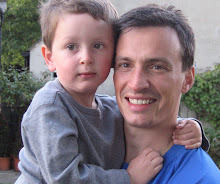

 Posts
Posts

